
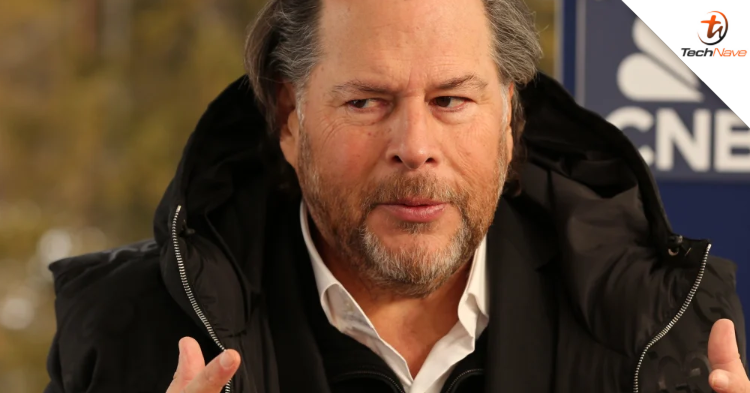
Salesforce CEO Marc Benioff has revealed that artificial intelligence now performs up to 50 percent of the company’s internal work. This includes key areas such as customer service, software development, and internal operations.
The shift highlights a new phase in enterprise automation, where AI is positioned as a central part of the digital workforce.
AI reshaping Salesforce’s internal workflow
In an update shared on 26 June 2025, Benioff described the current landscape at Salesforce as being powered by a “digital workforce.” According to him, AI is already integrated across many departments, processing tasks with an accuracy rate of around 93 percent. This includes customer support operations for major clients such as Disney.
Benioff emphasised that hundreds of thousands of customer interactions are now handled daily by AI. This transformation has led to greater efficiency but also internal restructuring, including a reduction of over 1?000 jobs earlier this year.
However, AI has also created demand for new roles, especially in managing and supporting AI products.
Agent Force and the push toward autonomous AI
Central to Salesforce’s AI efforts is Agent Force, an autonomous agent platform already adopted by more than 5?000 clients. The platform allows businesses to automate customer engagement, support, and internal workflows through AI assistants.
Salesforce aims to scale this to 1 billion active AI agents by the end of 2025.
Benioff noted that Agent Force offers more independence compared to existing AI tools like Microsoft Copilot.
He even shared that an AI assistant helped co-author Salesforce’s annual business plan, reflecting how deeply integrated these tools have become in executive-level decision-making.
While praising the benefits, Benioff also warned of the risks associated with AI. He stressed the importance of monitoring AI-generated output for security, bias, and accuracy, especially in enterprise use cases.
Industry impact and what it means moving forward
Benioff believes that AI has the potential to unlock between USD3 trillion to USD12 trillion (approximately RM14 trillion to RM56 trillion) in global productivity gains.
He encouraged leaders to reframe how they think about work, pointing out that AI is no longer just a tool, but a full-scale participant in daily operations.
This shift raises important questions about the future of employment, job roles, and digital accountability—especially as more businesses look to adopt similar models.
What does it means for Malaysia?
As AI continues to automate essential business functions, companies in Malaysia may begin evaluating how tools like Agent Force can reduce costs and boost productivity. Will local enterprises follow Salesforce’s lead and embrace AI as part of their core workforce?
Let us know what you think. Stay tuned to TechNave.com for more updates.



COMMENTS