
In 2024, companies are adding generative AI to devices like smartphones. We've already seen what the new Samsung Galaxy S24 series can do with the new Galaxy AI. But how many of these features will appear on other devices, and what else can we expect?
With that in mind, we decided to write up a list of AI-powered features that could be on your phone someday. Note that some of these features may not appear on iOS devices. But you can expect a similar iOS version to show up eventually. Anyway, read on to find out our predicted features!
In-app search results
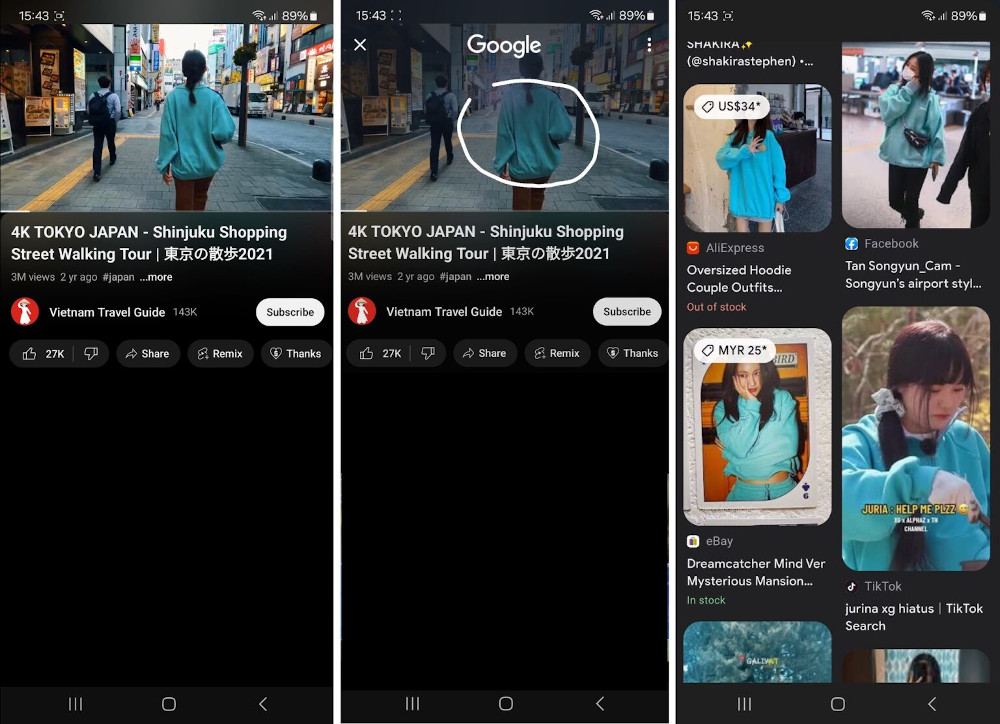
Google's Circle to Search even works on YouTube
The first thing we can probably expect is an easy search function, like the Circle to Search introduced with the Galaxy S24 series. Essentially, it performs a search for objects in an image or photo. This can be done by circling the object of interest (i.e. a bag or shirt) with a finger, which activates a Google search. Interestingly, the feature will even work with some Google apps like YouTube, so you can search for objects you spot in videos.
Those unaware may think the Samsung Galaxy S24 series' Circle to Search is a Samsung-only feature, but that's only for the short term. The feature was developed by Google for Android devices. But it's currently a timed exclusive for selected Samsung Galaxy and Google Pixel devices. Google has confirmed that more Android smartphones will have Circle to Search beginning this October, so you can look forward to it.
Besides searching via images, wouldn't it be great if we had other ways to do so? Likewise, we hope to see companies create variants of Circle to Search. Tentatively, let's call them Voice Search and Text Search. As the names imply, the idea is to have in-app or pop-up search results for the text and voice. For text, you would do so by highlighting a section or word in a document. On the other hand, Voice Search will function like Google Assistant, delivering search results based on voice prompts.
Photo Editing

Generative Fill has been around for a few months (like on Adobe Photoshop), but it's only started appearing for smartphones
Photography is another area where AI could see the most use. For example, Galaxy AI's Photo Assist has a background fill feature called Generative Fill. This feature can fill up the missing background from cropping or angle adjustments, making it seem like the corrected image wasn't edited (or at least hard to tell). We can see more phones getting features allowing for image background fill, shadow removal, or resolution upscaling. It would also be interesting if the AI could 'restore' the details of a blurry photo taken with long-range digital zoom.
Text generation
We could also look to AI for help with text documents. Using Galaxy AI as an example again, its Note Assist does interesting things we wish to see replicated in other devices. For instance, generated summaries turned out to be highly convenient. It makes it possible to quickly gain details from documents or web pages without reading through them on the small screens of our smartphones. An AI feature to create generic emails could also be very convenient for fields like public relations, which requires the person to send out lots of emails.

ChatGPT is probably the most popular AI text generation platform, so having something on our phones can be handy
In-app translation
Translations for voice and text are also something AI can easily help with. Again, this has been demonstrated with Galaxy AI. With AI, smartphones can now do real-time translations during voice calls or text messages. This enables users to converse with people who only speak or write using languages they don't know. For instance, you can get translations from English to Japanese and vice versa. In particular, it's useful for work that requires communication with foreigners, especially if they don't speak the most spoken language in the world - English.
Mind you, real-time AI language translation still has room for improvement. For one, there's a delay before voices or messages are translated. The former makes sense since the AI likely needs time to record and process the voice. Moreover, currently available AI translation features support a limited set of languages. That's fine since people are more likely to visit and work for or with people from those countries. Regardless, we would like to see more languages supported.
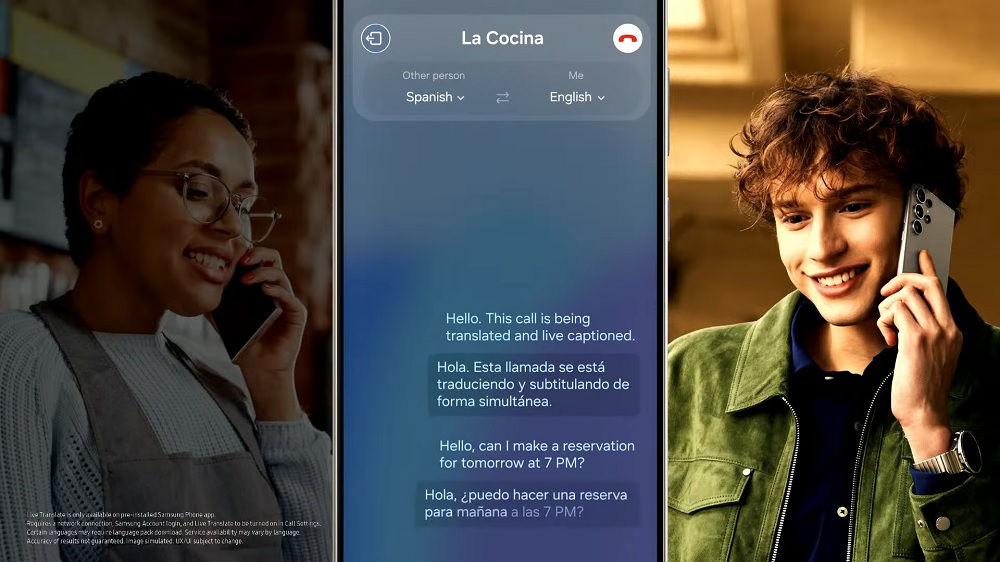
Galaxy AI's in-app call translations could be a great way to learn a new language
Device management
We also foresee AI having a role in device management. One way this can be relevant is in improving battery life. A device with an AI that actively detects what you're doing and adjusts things accordingly could help extend your phone's battery life. Of course, this AI feature will have to keep all info on-device, or it will raise concerns about data privacy. It also has to do this real-time monitoring without using more battery than it saves, as it would defeat the purpose.
Similarly, security for the device and its online connection could become a thing. AI could learn a user's behaviour and determine if something being done is out of the norm, perhaps prompting a device lockdown to prevent data theft.
Device customisation
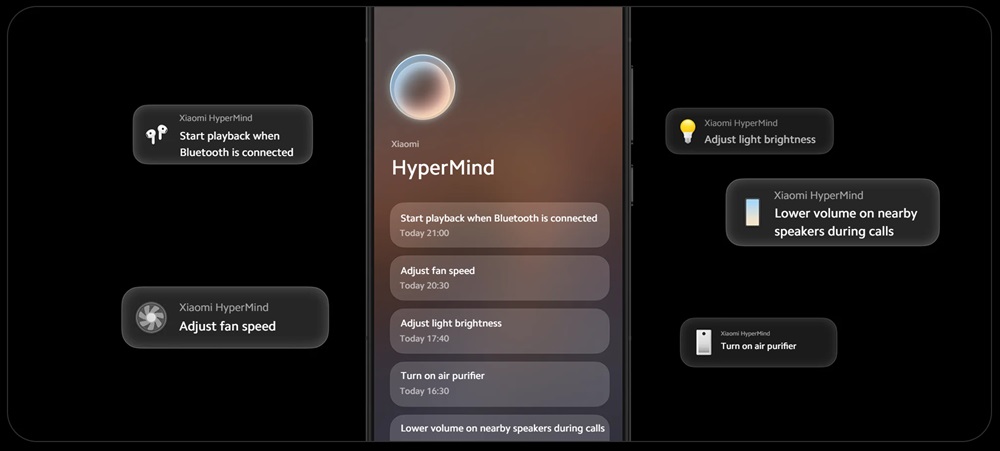
Xiaomi's HyperOS aims to help with device automation
Continuing with the above, the recently unveiled Xiaomi HyperOS can learn a user's habits and automatically execute certain functions accordingly. Based on Xiaomi's examples, this can range from automatic music playback when Bluetooth is connected to switching on your room's air purifier or light once the clock hits a specific time. Xiaomi has said that its self-developed large foundation models will be "applied system-wide", with logos on the official website hinting at AI use in drawing, writing, and image editing.
Overall, we can definitely see more AI-powered features in smartphones starting this year. The goal of AI and generative AI is to automate many of the tasks and processes we have in our daily lives. As such, there are many areas where AI can help. Of course, things need to be done carefully, so that issues like privacy concerns can be addressed. By the way, if the article feels very Galaxy AI-centric, that's because Samsung and Xiaomi are the few with generative AI implemented on their devices for now. Of course, we expect to see more examples in the future.
With all that said, what features do you think we'll see in future generative AI-powered smartphones? Also, what are the safety measures or checks and balances companies should have to prevent potential problems? Share your thoughts in the comments below, and stay tuned to TechNave.com for more articles like this.



COMMENTS