

During Computex 2025, Acer's senior executives from various business units made a public appearance to showcase the brand's latest technologies and strategic roadmap in the fields of AI PCs, smart wearables, connected devices, desktop computers, projectors, and displays. In response to the growing global demand for AI and mobile connectivity, Acer emphasised its commitment to promoting product diversification and cross-platform integration, striving to create an open, practical, and user-friendly smart ecosystem.
AI PCs Gradually Introduced as the Lightweight Trend Continues
We managed to have an interview session with James K. Lin, General Manager of Acer's Notebook Business Unit, during the conference. He stated that the integration of AI functions in the PC field is not just a technological upgrade, but also a significant opportunity for user education. Moving forward, Acer will not pre-install AI features on all devices but will instead offer them as downloadable tools, allowing users to access them on demand and enhancing flexibility in software and hardware integration.

He also noted that although the overall Chromebook market is decreasing, Acer continues to grow in the U.S., India, and other Asian markets, making Chromebooks a key part of the company’s strategy. In addition, in response to the trend toward thinner and lighter laptops, Acer has introduced models under 1kg. However, Lin believes that a successful product must strike a balance between weight, durability, cost, and battery life to truly meet market needs.
New Forms of Smart Wearables: From Rings to Translation Earbuds
Next, Jong, President of Acer Gadget, introduced two of Acer's latest smart wearables: the Acer FreeSense Ring and Acer AI TransBuds (AI-powered translation earbuds). He highlighted that 2025 marks a crucial turning point for the widespread adoption of AI applications. These devices not only collect data, but also enhance daily life through AI processing.
Allen specifically explained that Acer chose to enter the market with smart rings and earbuds, rather than smartwatches, which are in a highly saturated market. This is to differentiate its hardware offerings and provide more diverse use cases. He emphasised that Acer does not intend to create a closed ecosystem like Xiaomi or Huawei.
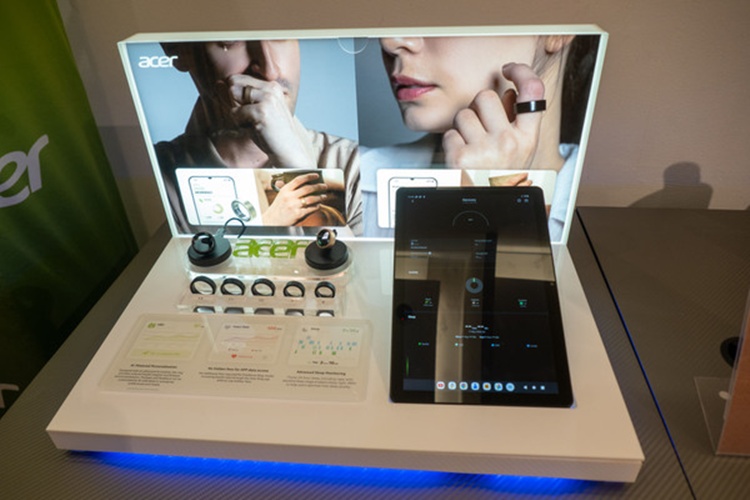
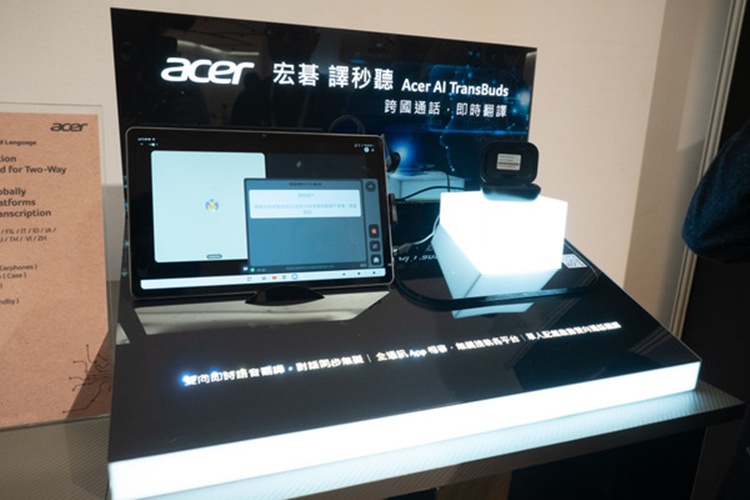
Instead, it is pursuing a "One for All" open strategy, enabling its products to connect seamlessly with devices from any brand. For instance, AI TransBuds support multi-platform use and can perform real-time translation across various apps, significantly improving cross-language communication.
5G MiFi Reintroduces Acer to the Connected Device Market
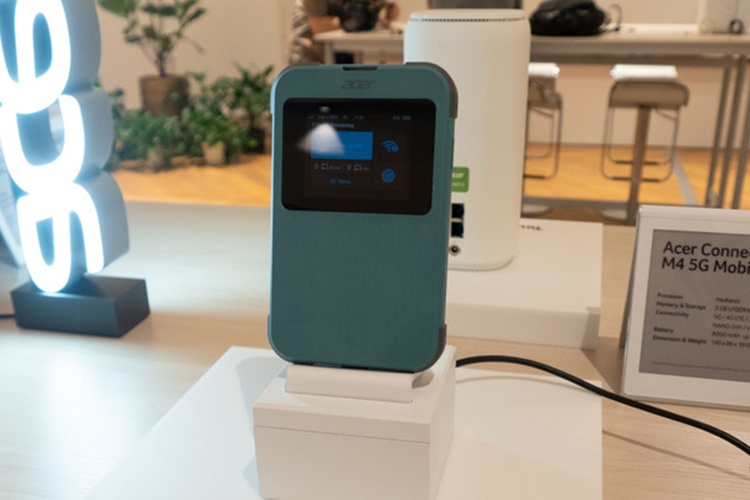
Regarding connected devices, Eric Y.L. Huang, Director of Acer's Connectivity Business Unit, announced that Acer is re-entering the connected device market, starting with the 5G MiFi mobile router. The device features an IP68 water and dust resistance rating, built-in NFC, and is scheduled to receive AI and Wi-Fi extender capabilities in Q4 2025. It can connect to hotel Wi-Fi and provide an independent SSID, offering added convenience for travellers and remote workers.
He added that this product is designed for users who need to keep laptops and photography equipment online even without a mobile phone. Currently, Acer has no plans to resume its smartphone business. Recently, its mobile phones were launched in India primarily through brand licensing.

As generative AI, smart wearables, and connected technologies continue to penetrate various applications, Acer’s Computex 2025 showcase highlighted its comprehensive strategy. From personal devices to commercial solutions and ecosystem platforms, through technology integration and open collaboration. Acer is not only enhancing its product competitiveness but also envisioning a smarter, more connected digital future for global users.
Moving forward, Acer will maintain its user-centric approach, deepen research and development in key technologies such as AI and edge computing, and continue contributing innovation to the global tech industry.


COMMENTS