
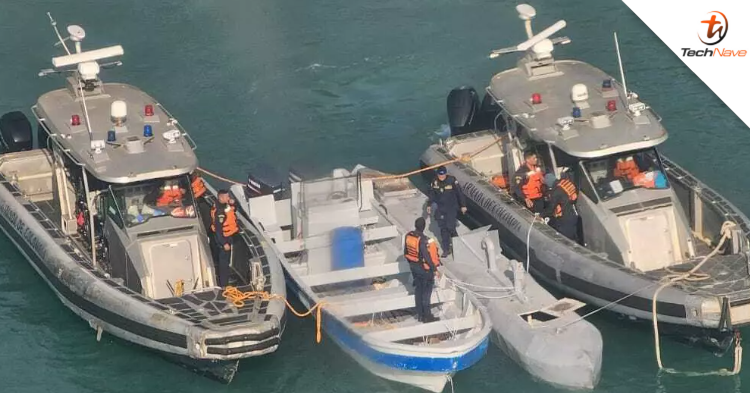
On 2?July?2025, the Colombian Navy revealed it had intercepted the country’s first unmanned narco-submarine equipped with a Starlink terminal.
The semi-submersible vessel, designed for remote operation, was reportedly capable of transporting up to 1.5 tonnes of cocaine over distances as far as 800 miles.
Although the vessel was found empty during this operation, authorities believe it was undergoing a test run for future drug trafficking missions.
How it happened?
Colombian authorities intercepted a drone-controlled narco-submarine off the Caribbean coast near Santa Marta on 1?April?2025.
Fitted with Starlink satellite internet and onboard surveillance cameras, the vessel was intended for long-range, unmanned drug transport. This marks the first case of such advanced technology being used in narco-submarines in Colombia.
The 15-meter vessel resembled a speedboat in design and was coated in grey for low visibility. It was found without any drugs onboard but equipped with key technologies, including:
- Starlink satellite modem enabling remote control from hundreds of kilometers away.
- Two antennas, including one mounted on the upper deck protected by fiberglass.
- Surveillance cameras, allowing operators to monitor the surroundings and engine conditions in real time.
Who is behind this?
The Colombian Navy believes the sub belonged to the Gulf Clan, one of the country’s largest drug trafficking organisations.
Authorities suspect the operation was a test run, as the craft was unladen but fully functional. Its ability to operate without crew reduces risk and improves stealth, making detection by radar and satellite significantly harder.
Security analyst H. I. Sutton pointed out that the drone sub is a semi-submersible – not fully underwater – which gives it a low radar signature.
Unlike crewed versions, this type eliminates human error or capture risks, and could potentially be deployed in greater numbers simultaneously.
In terms of cost, Starlink’s maritime connectivity plans range from around USD?250 to USD?2150 per month, which converts to approximately RM1170 to RM10,060.
These figures are minor compared to the potential value of a single cocaine shipment, which could easily run into the tens of millions in black-market pricing.
The vessel’s seizure is part of Operation Orion, a multinational anti-drug initiative involving 62 countries and over 127 institutions.
According to Colombia’s Navy, over 2326 tonnes of drugs were intercepted in the first half of 2025, including 327 tonnes of cocaine and 211 tonnes of marijuana.
What are your thoughts on the use of satellite internet in illegal smuggling operations? Do you think technologies like Starlink should implement stricter safeguards to prevent misuse? Stay tuned to TechNave.com for more updates.






COMMENTS