
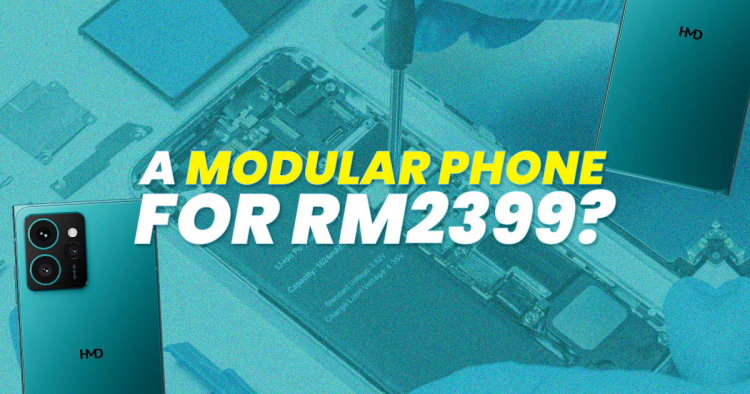
Modular smartphones have been an idea in the tech industry for over a decade. Early concepts, such as Google’s Project Ara, aimed to create fully customizable phones with swappable components like cameras, processors, and batteries. While these projects never reached mainstream success, brands like Fairphone and Motorola experimented with modular designs, focusing on sustainability and repairability but these were significantly more expensive.
However, HMD Global introduced the HMD Skyline, a smartphone with user-repairable parts, launched in Malaysia in July 2024 at RM2399. Unlike fully modular devices, it does not allow hardware upgrades, but it offers self-repair options to extend its lifespan. Could this be the modular phone we've been waiting for?
HMD doesn’t seem to recognize the Skyline’s modular potential?
For modular smartphones to succeed, they need easily replaceable modules, strong manufacturer support, and competitive performance while remaining durable and user-friendly. The HMD Skyline partially meets these criteria with its user-replaceable 4600 mAh battery and repair-friendly design, with parts easily available through iFixit.
While iFixit does provide global shipping even to Malaysia, the current iFixit only provides replacement parts for the existing tech specs of the HMD Skyline. This could change quite easily if HMD also provided upgrades for these parts, allowing HMD Skyline users to upgrade their smartphones by themselves without any issues.
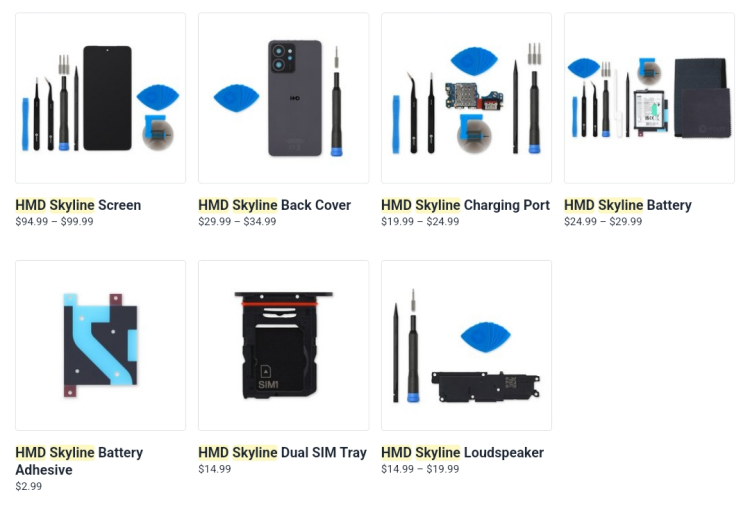
There's only replacement parts for the HMD Skyline on the iFixit site
Of course we expect that you would not be able to upgrade all the way up to the latest Qualcomm Snapdragon 8 Elite chamber without also requiring a vapour cooling chamber. Likewise, a new camera module with periscope lens may also need a different backplate, but with the modular system already in place, this seems like the most feasible way of making a successfully accessible modular smartphone.
However, while you could theoretically make a phone like the HMD Skyline last forever by replacing its parts by yourself, HMD have mentioned that it will only get up to 2 years of Android updates and 3 years of security updates. This creates an artificial limit to the phone, so, perhaps HMD are aware of their modular system, just not in the way of a modular smartphone.
HMD Skyline Specifications
For those who don’t know or need a refresher, the HMD Skyline has the following tech specs or specifications:
- Display: 6.55-inch pOLED, 144Hz refresh rate, 1000 nits peak brightness
- Processor: Qualcomm Snapdragon 7s Gen 2
- Memory: 12 GB RAM
- Storage: 256 GB internal, expandable via microSD up to 512 GB
- Rear Cameras: 108 MP main with OIS, 13 MP ultrawide, 50 MP telephoto
- Front Camera: 50 MP with autofocus and eye-tracking
- Battery: 4600 mAh, user-replaceable
- Charging: 33W wired, 15W magnetic wireless, 5W reverse wireless, Qi2 certified
- Operating System: Android 14, with two OS updates and three years of security updates
- Other Features: IP54 rating, customizable side button, Detox Mode for managing screen time
Conclusion - Needs more modular upgrades
To make modularity more appealing in Malaysia, HMD Global could introduce more swappable hardware modules, such as enhanced camera systems, gaming accessories, or better audio components. Expanding software support beyond two Android updates would also encourage longer long-term use. While the HMD Skyline takes steps toward a more sustainable smartphone model, a broader modular approach could improve its appeal.
Alternatively, with their modular self-repair smartphone framework already in place, HMD could also come out with a modular smartphone with a different name instead of the Skyline. While the HMD Skyline is somewhat of a midranger, a new modular HMD smartphone could cater for all markets, with parts for entry-level to midrange to flagship. So, rather than buying a flagship smartphone outright, one could instead start with a modular entry-level device that you could self-upgrade to eventually become a flagship device custom fitted to your needs.
We think that there's plenty of potential with such a system and much e-waste could be avoided but what do you think about the HMD Skyline’s approach to modularity? Would you consider a smartphone with replaceable parts over a fully integrated one? Stay tuned to TechNave.com for more updates on modular smartphones and upcoming tech trends.


COMMENTS