
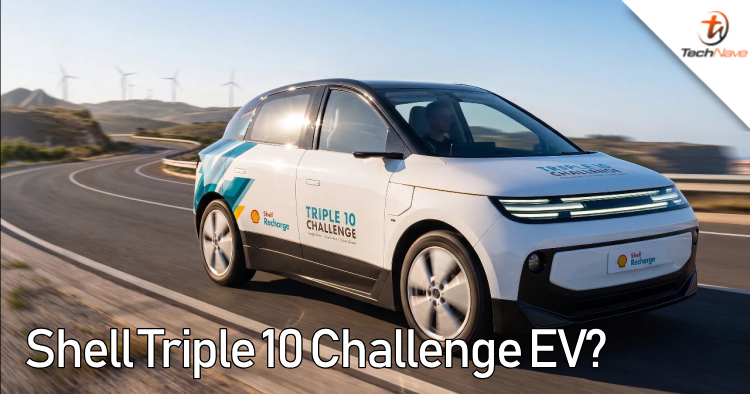
Shell recently unveiled its Triple 10 Challenge concept car featuring a B-segment EV that charges under 10 minutes with a standard 175kwh charger, has an efficient 10 km/kWh driving ratio and results in only 10 tonnes of CO2e lifecycle emissions. How did they do this? By changing the cooling plumbing for the battery.
Dunking the batteries in fluid?
Built alongside engineering partners like Horiba Mira, RML Group and Empel Systems, the Triple 10 Challenge concept car went from a 10% to 80% charge in just 9 minutes and 54 seconds using a standard public 175kW charger, adding 245 km of range without needing rare 300kW plus hyper-chargers. This hyper-efficiency feature is achieved by replacing traditional water-glycol pipes with a single loop of specialized, non-conductive dielectric fluid. The fluid bathes the cells directly to pull heat away, flows down the line to cool the electric motor and power electronics, and vents it all through a single front radiator.
This streamlined layout simplifies manufacturing, cuts down weight, and helps slash the total lifecycle carbon footprint to just 10 tonnes of CO2. Unfortunately, there’s no news yet whether or not this design will be adopted by any EV maker anytime soon as it was created more to meet Shell’s own Triple 10 Challenge. Quite obviously, there’s no Malaysia release date or pricing details either.
Do you think dunking battery cells directly into cooling fluid will become the new normal for electric cars anytime soon, or will manufacturers stick to traditional layouts? We’d worry about leaks but then they should have found out how to make tough cooling piping by now. Share your thoughts in the comments below and stay tuned to TechNave.com





COMMENTS