
Google is now introducing Gemini 3.5 Live Translate, a new audio model that enables live voice translation in over 70 languages with a delay of just a few seconds behind the speaker throughout the session. Let’s take a closer look.
According to Google, this technology is able to automatically detect language and produce more natural voice translations while maintaining the intonation, rhythm and tone of voice of the original speaker. Unlike traditional translation systems that wait for someone to finish speaking before translating, Gemini 3.5 Live Translate works continuously to ensure conversations remain smooth.
Google also says that this model processes speech in real time as the audio is streamed. It is also designed to work in noisy environments and can handle conversations involving multiple languages without the need for manual settings.
Availability
This model was first introduced globally in the Google Translate app on Android and iOS. When using the Live Translate feature, users only need to connect any headphones to enjoy a smoother translation experience.
For Android users, Google is also introducing a "listening mode" with 3.5 Live Translate. Users simply hold the phone to their ear as if making a normal call, and the audio of the translation will be played directly to them. This new experience is useful when users want to quickly listen to the translation without others hearing and don't have headphones with them.
Moreover, Gemini 3.5 Live Translate is rolling out to developers via the Gemini Live API and Google AI Studio. For enterprise customers, the feature will be available in Google Meet through a private preview program starting this month.
In Google Meet, this new technology increases language support from five to over 70 languages. It also allows for over 2,000 language combinations to be used in a single meeting, compared to the previous focus on translation to and from English.
Additionally, Google confirmed that all audio generated using this model will be tagged with SynthID. The digital watermark, which is undetectable by humans, aims to ensure that AI-generated audio content is identifiable and helps reduce the risk of spreading misinformation.
Useful in Malaysia?
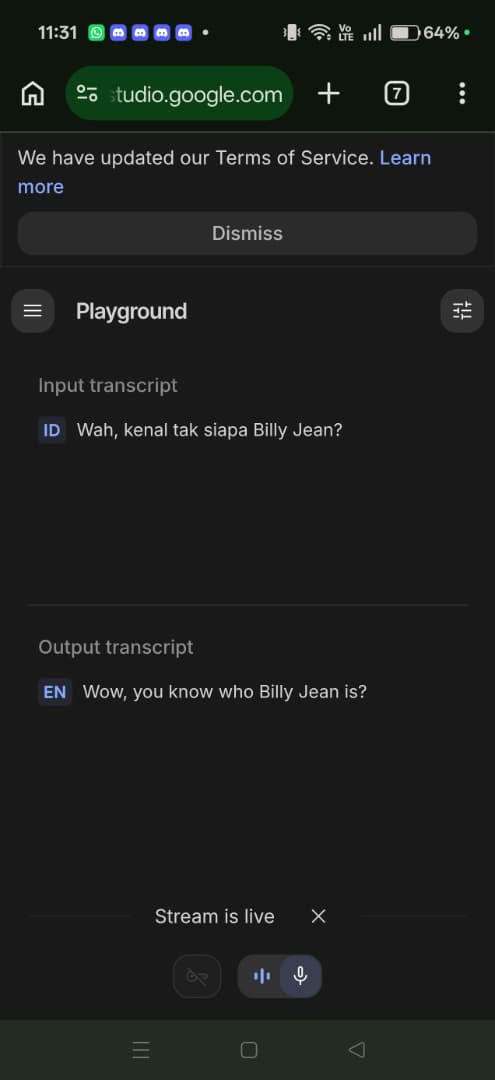
While you can use it in Malaysia, we do feel the feature needs a lot of polishing. When we were testing this feature, we actually said "Awak" but it transcripted it as "Wah", and the Malay language we used was assumed by the machine as Indonesian. So, it could take some time before this app is fully ready. What are your thoughts on the new feature? Do let us know in the comments below.
Stay tuned to TechNave.com for more updates like this.





COMMENTS