
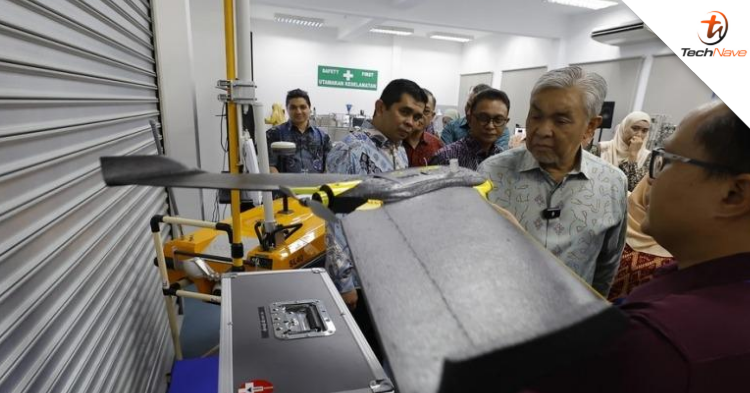
Image from BERNAMA
The Malaysian government will review early feedback from the public on the Budi Madani RON95 (BUDI95) subsidy rollout, following initial issues raised since the scheme’s announcement. So, what should you know about it?
What’s going on with BUDI95?
During a visit to Universiti Kuala Lumpur Malaysia France Institute (UniKL MFI) on 25 September 2025, Deputy Prime Minister Datuk Seri Ahmad Zahid Hamidi confirmed that stakeholders will assess public concerns and make adjustments.
Moreover, he noted that the Cabinet Committee meeting on 24 September focused on ironing out implementation details and addressing “initial issues” that may arise.
In addition, relevant agencies, including the Road Transport Department (JPJ), National Registration Department (JPN), and the Ministry of Finance, are expected to lead the necessary reforms.
For instance, holders of older MyKad cards may need to replace them, although the government has stated that this will initially be free.
Ahmad Zahid also urged Malaysians with expired driving licences especially those that lapsed more than three years ago to renew them to remain eligible for BUDI95.
What you should know about BUDI95
Here are some important details about the new subsidy scheme:
- Fuel pricing: Starting 30 September, eligible Malaysians can purchase RON95 petrol at RM1.99 per litre.
- Quota system: Each driver is capped at 300 litres per month. Any usage beyond the quota will be charged at the market rate, which is estimated to be around RM2.60.
- Eligibility: Drivers with Learner (L), Provisional (P), and Competent Driving Licence (CDL) are covered. Police and military personnel will have early access starting 27 September, while certain B40 recipients will begin on 28 September.
- Verification system: Eligibility will be tied to MyKad and active driving licence records. The government has also launched the BUDI95 portal (budi95.gov.my) for users to check their status and monitor their quota.
- Financial impact: The scheme is expected to save Malaysia between RM2.5 billion and RM4 billion annually, although this figure is lower than earlier projections.
- Future phases: There are ongoing discussions about possibly excluding the top 15 per cent income group (T15) from the subsidy in future phases
Our thoughts
From a tech perspective, BUDI95 depends on real-time digital verification, where MyKad is scanned and cross-checked at petrol stations.
Furthermore, this rollout will test the country’s identity infrastructure and hardware reliability at filling stations. Potential issues could include card-reader glitches, system downtime, or payment integration problems.
To improve efficiency, digital wallets such as TNG eWallet are also preparing mini-apps to streamline subsidy purchases. Smooth user experience and backend stability will be crucial in ensuring public confidence in the scheme.
Will BUDI95 deliver a hassle-free digital subsidy experience for Malaysians? That will be an interesting subject for us to see.
Did this news catch your attention? Stay tuned for more news like this at TechNave!
COMMENTS