
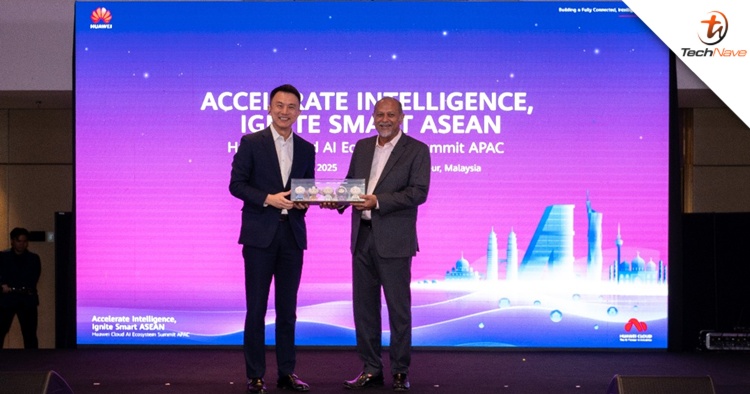
The Huawei Cloud AI Ecosystem Summit APAC 2025 has set the stage for a new wave of AI-powered economic growth in Malaysia and the wider ASEAN region. Held on Day 2 of the ASEAN AI Summit 2025, the event gathered around 300 industry delegates, bringing together government leaders, tech executives, and innovators to discuss the future of AI adoption in the region.
Ethics, Sustainability, and National Ambition
Minister of Digital, YB Gobind Singh Deo, underscored the importance of ethics and sustainability in Malaysia’s AI journey, revealing that the National AI Office (NAIO) is finalising the AI Technology Action Plan 2026–2030 and relevant regulatory frameworks.
“Central to this ambition is Malaysia’s Digital Economy Blueprint, powered by initiatives like Malaysia Digital (MD). These efforts are amplified through strategic collaborations with technology leaders like Huawei,” he said, stressing the role of public-private partnerships in shaping Malaysia’s digital economy.
Building the AI Talent Pipeline & Partner Ecosystem
Simon Sun, CEO of Huawei Technologies (Malaysia), announced bold talent and ecosystem development targets under the Huawei Malaysia AI Talent Programme:
- 30,000 Malaysian AI talents to be nurtured over the next three years, including students, government officials, and industry leaders.
- 200 local AI partners to be developed through collaborations, knowledge transfers, and partnerships with leading Chinese AI companies.
Huawei Cloud will also act as a bridge for AI investments from China, fostering local innovation and even encouraging the creation of new Malaysian AI entities.
ASEAN’s “AI Region” Vision
Aka Dai, Vice President of Huawei Cloud Marketing, called intelligence a “definitive trend” and positioned cloud and AI as core engines for innovation and growth. With 26 years in ASEAN and seven years operating Huawei Cloud in the region, he reaffirmed Huawei’s commitment to ramping up local investment.
Huawei Cloud’s strengths include:
- Global footprint – 34 Regions and 101 Availability Zones (including 5 Regions and 17 AZs in ASEAN) for ultra-low latency.
- Open AI model ecosystem – Supporting over 160 mainstream open-source models.
- Pangu Models – Multimodal AI models driving its “AI for Industries” strategy.
Industry Applications Across 500+ Scenarios
In her keynote “Leap to Cloud, Heading to AI”, Ms Li Yin, CTO of Huawei Cloud Enterprise Intelligence, showcased how Huawei Cloud has collaborated with partners across 30+ industries and 500+ real-world scenarios.
By leveraging the Pangu foundational large model, ModelArts AI toolchain, and proven engineering methods, enterprises can use their own datasets to develop customised AI models with high-quality training and fine-tuning.
Huawei Cloud’s future AI investment priorities include:
- Strengthening a secure and trustworthy AI computing foundation.
- Applying ModelArts and Pangu Models to power sector-specific AI assistants, smart city solutions, and AI-driven applications in healthcare, manufacturing, and transport.
- Fostering ecosystem growth through deep partner collaboration.
A Regional and Global Effort
The summit’s speaker lineup included leaders from Malaysia’s NAIO, iFLYTEK, Zetrix, TrustDecision Malaysia, and Multimedia University, reflecting a collaborative approach to building a strong, inclusive AI ecosystem.
With the Prime Minister of Malaysia, YAB Dato’ Seri Anwar Ibrahim, in attendance during the opening day of the ASEAN AI Summit, the event reaffirmed Malaysia’s commitment to strategic public-private partnerships as a key driver of its AI ambitions.
Stay tuned for more trending tech news at TechNave.com.




COMMENTS