
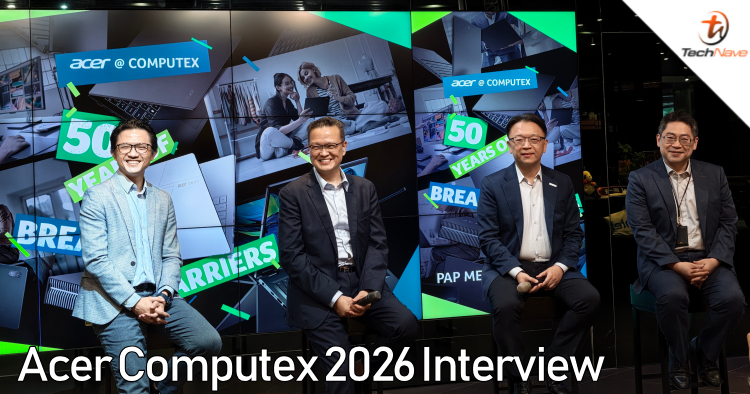
We recently managed to sit down with Acer’s Executive officers (Jerry Kao, Chief Operating Officer (COO), Acer Inc., Andrew Hou, President, Acer Pan-Asia Pacific Operations, James K. Lin, General Manager of Notebook Business, Acer Inc., Stanley Kao, CEO, Acerpure, Jackie Lee, CEO, Altos Computing) for an interview at Computex 2026. Topics covered included why certain decisions were made at Acer, reactions to the Macbook Neo, insights about Agentic AI and Acer’s plans for the future. Check it out below.
Part 1: The MacBook Neo Challenge and ARM-Based Laptops
Question:
What would Acer do if Apple released a highly price-competitive product? Can you tell us more about Acer's strategy to compete with a new MacBook Neo challenge?
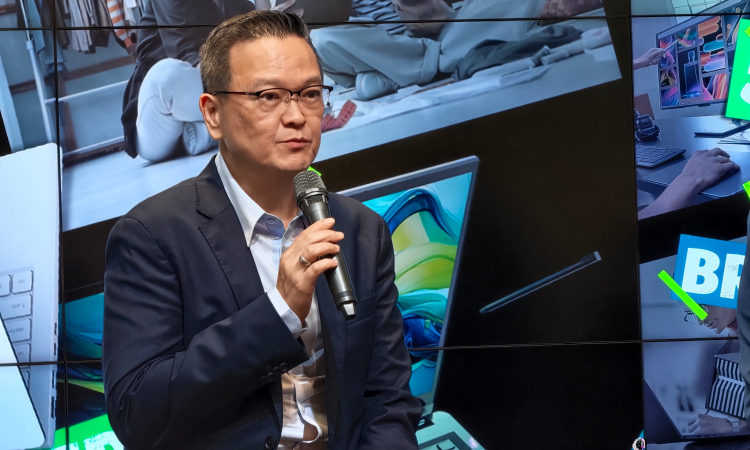
Andrew Hou, President, Acer Pan-Asia Pacific Operations
Andrew Hou:
If you look at different regions, mature countries like Australia or most of the developed countries will experience a big impact. However, in Southeast Asia, we do not see that much of an impact yet.
What I heard is that because supply was constrained, Apple prioritized specific countries. This means that in some countries, you do not even have a machine being sold yet because they prioritized other regions.
But for Asia, you see products like the Google Chromebook, which is part of this ecosystem. We are going to have several different levels of products coming from ARM-based CPU notebooks. Acer already has a diversified strategy in this direction. First of all, we want to partner with more CPU vendors so that we can have a wider price range and more price point options to reflect the competition. Right now, everybody wants to do client CPUs. It is not only Qualcomm, but MediaTek and even NVIDIA want to build CPUs as well. This will give us more opportunities to offer different product levels and skills so that we are fully able to compete.
Part 2: Acer's Multi-Engine Strategy (Acerpure, Altos, and EV Charging)
Question:
I have seen that Acer is diversifying its portfolio. Is Acerpure a big part of your revenue stream?
Andrew Hou:
Yes. I did not show the exact data to you, but when talking about our business segments other than PCs, Acerpure and other subsidiary sectors now make up about 35% plus of our revenue. It really is significant, and it is growing.
I can also share a little history with you. In the last 25 years, the group's main focus was trying to bring as many new companies as possible, which we called Tigers, to go IPO (Initial Public Offering). We have about 15 successful companies that went IPO already.
Now, the direction under our Chairman, Jason Chen, is a little bit different. Rather than spinning off more subsidiary companies to do IPOs, he wants all the companies that are already IPOed to grow bigger and make a larger impact. Because as you mentioned with pricing, we do not know how sustainable the PC market will be over time. We need more crucial business lines so that we can be sustainable for the next 80 years. Therefore, the direction from Acer headquarters is that all the Tigers that already IPOed need to think about leveling up and reaching 100 million or even 300 million US dollars in revenue. All the subsidiary CEOs are under very big pressure to chase that revenue.
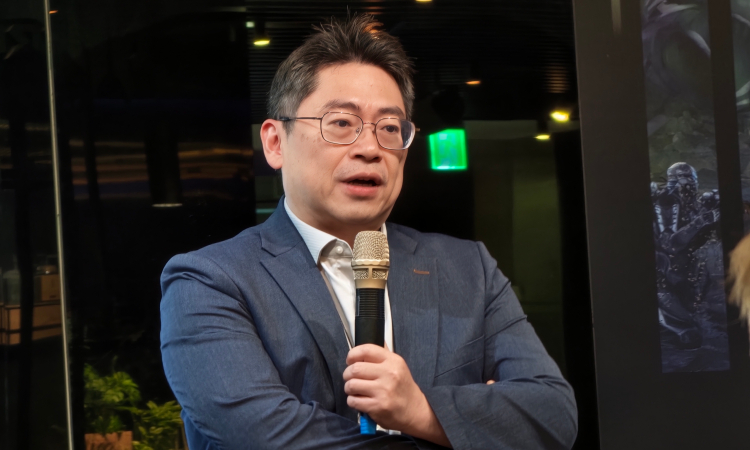
Stanley Kao, CEO, Acerpure
Stanley Kao (Acerpure):
As an appliance industry player, Acerpure is a very new brand, only about 5 to 6 years old. I will not point out who my direct rivals are because we are still quite young.
However, I would love to say that in the last 6 years, we have grown from a single-model company that only made air purifiers to a brand with a broad product cabinet. We now make air circulators, water purifiers, vacuum cleaners, dehumidifiers, and now even air conditioning. We are more like an everyday lifestyle appliance brand now.
Instead of looking for rivals, we will keep our pace step by step to first develop more forward-looking products, AI products, and reliable products. Basically, we will continue to penetrate into more and more countries. For example, last year we went into Indonesia and also Vietnam. We are now trying to step into Europe as well, so market-wise, we will expand into more regions.
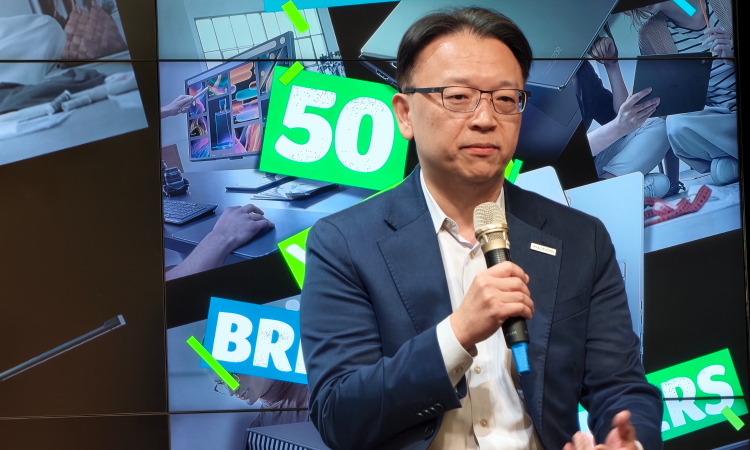
Jackie Lee, CEO, Altos Computing
Jackie Lee (Altos):
At Altos, we are focused on winning the AI server segment within the Acer Group. I do not need to explain to you how big the market is, as shown by Jensen Huang of NVIDIA. Jensen signed his signature on our machine, and he noted that the AI server market in the next year is going to be a 1 trillion US dollar revenue kind of industry that keeps ongoing.
This year, everyone is talking about Generative AI. NVIDIA announced a new chip for Agentic AI and AI PCs. In the past, you probably heard a lot about regular AI PCs, but now the focus is on Agentic AI PCs. This is a big opportunity for Acer as well as for Altos because we are doing a lot of products, including servers, workstations, Edge AI devices, and high-performance liquid-cooled servers.
In the past six months in the Asia Pacific region, we actually grew very fast, and we will grow even faster than before. I want to note one thing: the business model of Altos is quite different from other ecosystem players in Taiwan like Quanta or Wistron. Their customers are the massive Cloud Service Providers (CSPs), meaning thousands of products for giant server rooms. Altos, on the other hand, focuses on small and medium-sized businesses, especially in Southeast Asia.
Institutions like local hospitals or schools might need localized Edge computing or a cloud on the edge. They might just need one or two H200 or B200 racks rather than a massive NVL72 big rack. Our focus is to penetrate the small and medium business sector, which is a completely different business model compared to the big guys working with hyperscale data centers.
Question:
I saw an EV charger displayed there. Is that something you would like to invest in?
Andrew Hou:
For the EV chargers, I cannot tell you too much because I do not personally own that business unit. What I can share is that EV chargers are one of the tech categories that Acer is always interested in. We invest engineering resources into it, we try to look for local partnerships, and we are actively navigating this business opportunity.
Part 3: Deep Dive into the Windows vs. Mac Ecosystem
Question:
Honestly, what was your reaction when Apple announced the MacBook Neo at a price that is very competitive to your products?
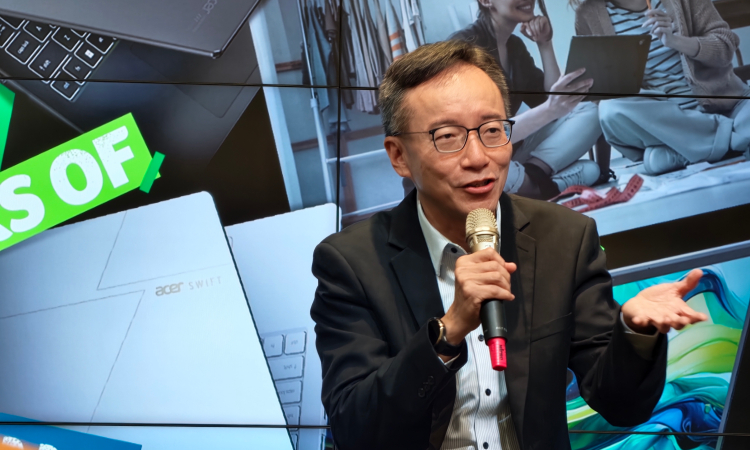
Jerry Kao, Chief Operating Officer (COO), Acer Inc.
Jerry Kao:
Shocked. I was shocked, but I am happy also because new variables introduced to the market will trigger something different than before. When a common competitor arrives, it means there is a chance for change, but our very first reaction was shock.
Question:
For the longest time, Windows laptops have often been considered lower in quality compared to MacBooks. Now that Apple, with this price range, can produce laptops using premium materials that provide a premium experience, what is stopping Acer from producing the same for the exact same price range?
Jerry Kao:
Apple is indeed very successful with their devices. However, as we develop our innovations, we always look at how Apple is doing and how they treat the end-user. We respect them, particularly their attitude of treating the user as number one.
To us, our resources and spectrum are different because they control their own hardware, processor, and OS as a single entity. In the open ecosystem, we try to join forces to see if we can come up with very affordable but truly premium components and supply chains to build products.
Apple is able to concentrate all of their resources and components into one tight product line and make people learn how to use it. In the Windows PC world, our job is to pick up on the diverse, real needs of users. Because once users understand their choices, they want differences. Those distinct solutions are what the Windows PC ecosystem can offer and provide to them.
Let me add some context. First, Apple is a very unique company, and we are both lucky and unlucky that there is only one company in the world that operates like that. They deserve respect for sure. Second, the nature of the difference is that Apple is a closed system, while the non-Apple world is an open system. An open system means different silicon partners, different software companies, and different ODM customers.
Third, Apple is a very rich company that benefits heavily from its smartphone business. The supply chains for smartphones and PCs are getting more and more overlapped. With the market power they have in smartphones, they gain massive supply chain benefits that carry over to their PCs.
When the MacBook Neo launched, it shocked us because in the past, Apple always stayed at high price points like 999 dollars, before sometimes moving down to 599 or 699 dollars. But as Apple took this step, the last 6 months marked the first time I have seen the PC industry become so highly collaborative. Even though there is still competition among us, we all have the same competitor, and we want to see how we can compete with Apple.
After 6 months, you can see that many companies, including Acer, are providing competitive alternatives. Many products, including Acer's, are highly competitive from a price point, spec, and performance view, and they offer features Apple does not have, like touch screens. Apple's entry has acted as a threat that pushed the industry forward to provide better mainstream products.
While strong competition will continue in the future, the PC industry now shares a common goal, and the products have been uplifted to bring more value to users. On the other side, there are still many areas that Apple is not yet capitalizing on.
For example, when talking about Agentic AI PCs, everyone is discussing hybrid and Edge AI processing, but you do not hear this kind of deep ecosystem discussion in Apple's ecosystem yet. In the non-Apple world, we have many unique strengths. Our job is to equal or exceed Apple where they are strong, and to move at full speed where Apple is not yet capable, setting a competitive entry barrier. Ultimately, this ecosystem competition gives users better choices.
Part 4: Silicon Partnerships and the Gaming Handheld Market
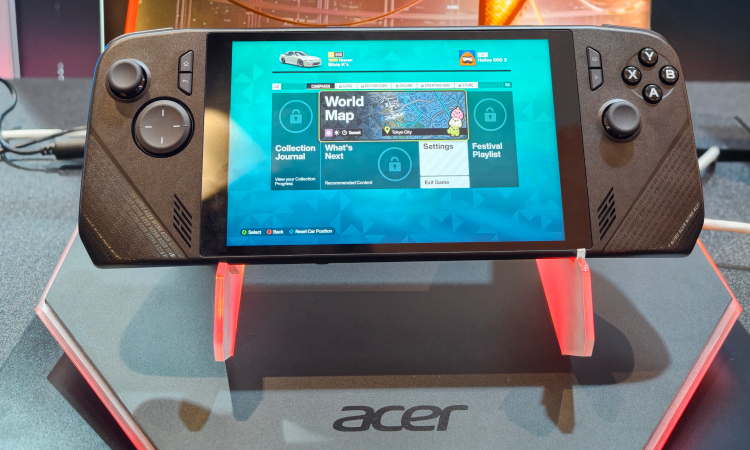
The Acer Nitro Blaze link
Question:
I would like to know more about your relationships with Intel, AMD, and NVIDIA. It seems like at Computex, you were the first to launch the Intel Lunar Lake-powered device with the Predator 8, but you were not in the first lineup for the new NVIDIA-supported devices. Why were you not part of the first batch?
Jerry Kao:
Every company has its own agenda and limited resources, so we have to make choices regarding what is the first priority and what is the second priority. Furthermore, a top priority project does not always mean it is the very first product launched publicly to the market. Sometimes, a first-priority project involves heavy backend service resources that have not been publicly announced to you guys yet. To put it simply, it is not a case where we prefer Intel or want to focus on Intel products over NVIDIA. There are a lot of different development considerations that result in the launch schedules you see.
Question:
Remember last year at IFA, you launched a concept handheld device with a controller you can pull out. Any news about that going into mass production?
Jerry Kao:
The best is yet to come. We put it clearly that it was a concept launch, meaning we wanted to test the market and gather feedback. We received a lot of feedback, and we are thinking in two different directions. First, how to turn that specific concept into a real mass-production product. Second, based on that feedback, what kind of even crazier ideas we can create for a bigger impact. Both directions are actively ongoing, but I cannot share specific details yet or it will spoil the surprise for next time. Keep watching us.
Question:
You mentioned earlier that the smartphone and laptop spaces are intersecting. Are you going to re-enter the smartphone market?
Jerry Kao:
The answer as of up to now is no. Thank you.
Question:
Gaming laptops have gotten very expensive, but newer processors are making it possible to play games on normal laptops without a discrete GPU. Is the advancement of integrated GPUs encroaching on the dedicated gaming space, or is it an opportunity?
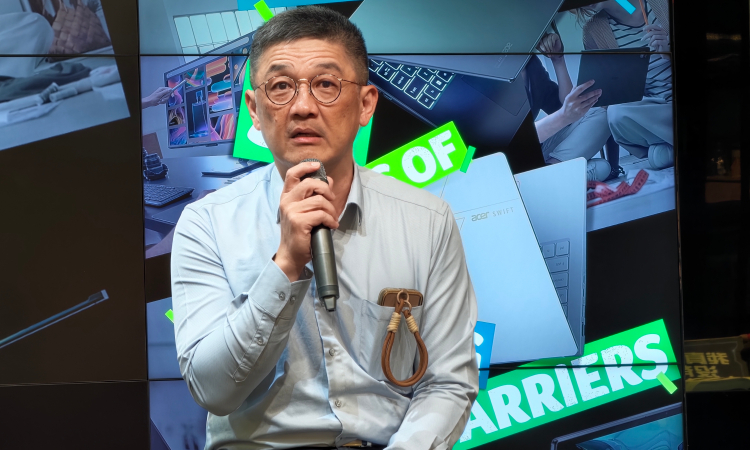
James K. Lin, General Manager of Notebook Business, Acer Inc.
James K. Lin:
This is a clear market trend. Integrated GPUs are getting much better, and their performance is becoming highly competitive. Localized AI demands have also driven graphic power up significantly since around 2024. The processing power coming from integrated graphics on the System-on-Chip (SoC) is growing, which means the market for lower-end discrete graphics is shifting.
We see that many users who buy gaming laptops do not actually use them exclusively for gaming, they just want raw performance. Because great graphic power can now come directly from the processor SoC, it opens up new trends. We see this across our lines, from the gaming setups down to premium thin-and-light segments like the Swift and Aspire series.
Our goal is to provide users with more products capable of running across different territories, whether you are gaming, creating content, or working. We cooperate closely with Intel, AMD, Qualcomm, and NVIDIA to bring that SoC powerhouse performance straight to consumer devices.
Part 5: Gaming Handheld Strategy and Evolution
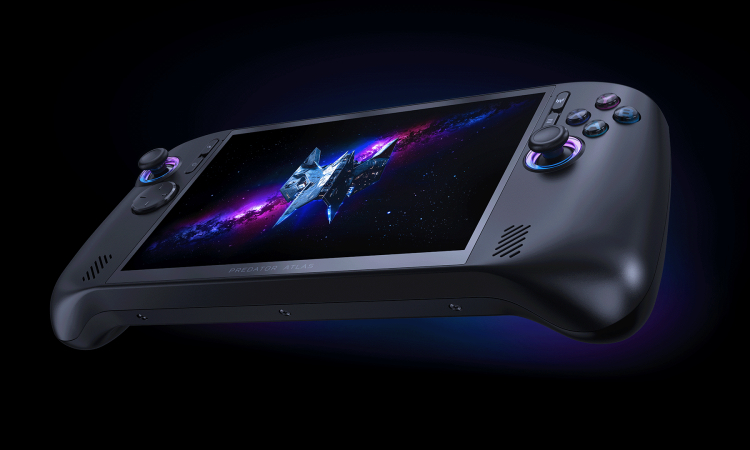
The Predator Atlas 8
Question:
We have seen the Predator 8, and the Predator brand has always been in the premium space for PC gaming. Now you are introducing a premium handheld console. What do you see in the future of handheld gaming, and will it overtake the traditional PC desktop form factor or coexist?
James K. Lin:
It acts as a complementary alternative for the user. At home, you will supposedly have a primary PC, but you may want a secondary device for a different purpose. We see usage becoming highly diversified.
The reason we built the Predator 8 handheld on the Intel platform is because we saw great graphic performance capable of delivering a stellar gaming experience. We also developed software for OS optimization so that people can concentrate purely on the gameplay experience while maintaining connectivity to their wider home ecosystem.
In this direction, we see a lot of possibilities. Handhelds can connect multiple devices into a home ecosystem where everything works together. That is our philosophy for going into the handheld market.
Jerry Kao:
In addition to that, there is always a huge demand for portability. Originally, core gaming belonged strictly to the desktop domain with a large screen and super strong power. Then engineering allowed for portable gaming notebooks. Yet, people still wanted something even more portable.
In the past, the alternative for portable gaming was the smartphone. But a smartphone form factor cannot provide the true high-performance experience that a dedicated gamer needs. This is why the handheld market is emerging right in the sweet spot between a smartphone and a laptop. It allows you to have a smaller, highly portable device without sacrificing the notebook-level gaming experience.
It is an incremental device. A core gamer might not buy a gaming handheld as their very first or primary gaming device, especially since memory and components are expensive right now, they will likely buy a laptop first. But if they want to enjoy a legitimate gaming experience on the go, a smartphone is not going to satisfy them, which makes the handheld the perfect choice.
Question:
The Predator 8 is not the first handheld concept Acer has launched. A couple of years ago, you had the Nitro Blaze concepts and streaming prototypes. From then until now, what lessons have you learned from developing these gaming handheld devices?
James K. Lin:
It all comes down to experience. We want to try new things, and when you experiment, there can be errors. Our previous conceptual prototypes taught us that certain spec combinations, thermal performance, and price points were not yet an optimized solution for the end-user. We sold some, but we understood that it was not completely ready to fulfill what users truly expected out of a handheld console. We learned a lot from those previous experiences, which directly allowed us to create this new generation. Without those early steps, we would not have the knowledge we have today.
Part 6: Component Branding and Sustainability (Vero)
The Acer Vero
Question:
Acer is mostly known for selling computer systems like laptops. But over the years, I saw that Acer has also gone into standalone components like memory, storage, and graphics cards. Is that a market that is steadily growing, or are you just competing in the mid-range space?
Jerry Kao:
When users build or upgrade their own PCs, there is always a structural demand for components. This is a business sector we monitor closely, which is why we introduced SSDs, memory, and select graphics cards.
However, we have learned to be careful. In the memory market previously, being overly aggressive across volatile market fluctuations caused financial losses. We want to focus on sustainable areas where Acer's core supply chain is strong, rather than just chasing short-term market opportunities out of our control.
For graphics cards, our resource investment up to now is not massive because we are targeting specific segments that fit our current resource focus. But we do have the products available.
Question:
You announced the Aspire X 16 running an Intel Core Ultra 7 processor, but at the same time, you have the Swift series, which is a more premium lineup, running Core 5 series chips. Is your branding strategy shifting? You also have the TravelMate P6, which is an enterprise laptop, while Aspire used to represent the affordable range. The branding seems a bit confusing.
James K. Lin / Jerry Kao:
We understand your question completely. Many people get confused by this, even internally! Let us clarify the design starting points.
TravelMate is the simplest to distinguish because it is strictly defined as our commercial and enterprise brand.
For our consumer lines, Aspire and Swift have fundamentally different design philosophies. Aspire focuses primarily on the mass market, while Swift focuses heavily on sleek, ultra-thin industrial design and premium materials.
Think of it like cars, using BMW as an example. Everyone understands the difference between a BMW 3 Series and a 5 Series. The Aspire line's starting point is like the 3 Series, while the Swift line is like the 5 Series, offering a slimmer, highly stylized design language.
However, if you want a massive engine inside a standard chassis, a BMW 340i can end up being more expensive than a base BMW 520i. The same thing happens with our laptops. If a general consumer wants top-tier Intel performance but has a limited budget, an Aspire with powerful ingredients, like an Aspire X, is exactly what they need. If they have a larger budget and prefer premium aesthetics, they will choose a Swift configured with those ingredients. We intentionally place different hardware components into Aspire and Swift to target distinct customer profiles.
Question:
We have not seen any new announcements regarding the eco-friendly Vero lineup recently. Is that segment being phased out?
Jerry Kao:
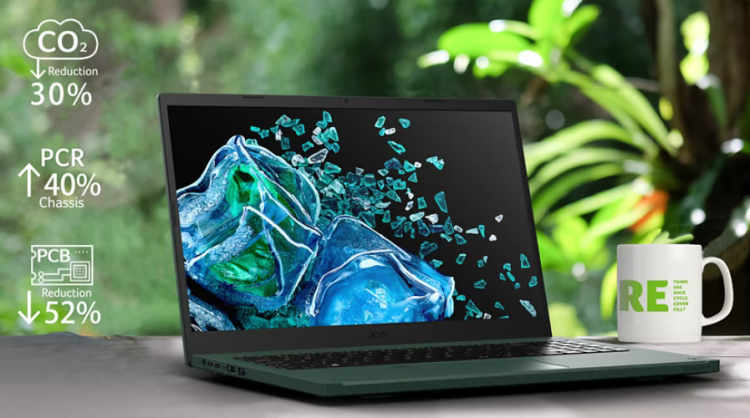
That is a good question. We do not have a standalone Vero model right now. If you remember four years ago when I first introduced the Vero line, I stated many times that my ultimate goal for Vero was for it to eventually disappear as a separate line.
My goal was for sustainability to reach a point where every single product line automatically meets those green standards. I am proud to say that the PCR (post-consumer recycled) plastic percentages and sustainable targets we pioneered years ago are now fully met across our standard product lines.
We are continuously working on sustainability topics, evaluating new materials, and seeing what else we can do. When we achieve our next major technological breakthrough that can lift green manufacturing to an entirely new level, we will absolutely name a dedicated product after it to capture the world's attention. Until then, keep watching for the best ideas to come.
Question:
This is a follow-up question regarding the MacBook Neo challenge. Acer seems to have two main candidates to answer it: the Swift lines and the Aspire lines. Can you elaborate on the thinking behind that?
Jerry Kao:
We do not design specific individual products solely because a competitor launches something. Those hardware elements are naturally available across our entire roadmap because we always balance multiple price points, performance levels, and form factors for different user segments.
Some consumers love the Aspire line, while others prefer the Swift line. The Swift air concepts naturally sit at a higher tier than standard Aspire configurations. When a competitor enters the market at a certain price level, people naturally look at our roadmap to see what models will compete with them. It is not a case where Acer scrambles to put out a sudden, purposeful model just to chase a trend; our roadmap is already built to comprehensively cover those consumer needs.
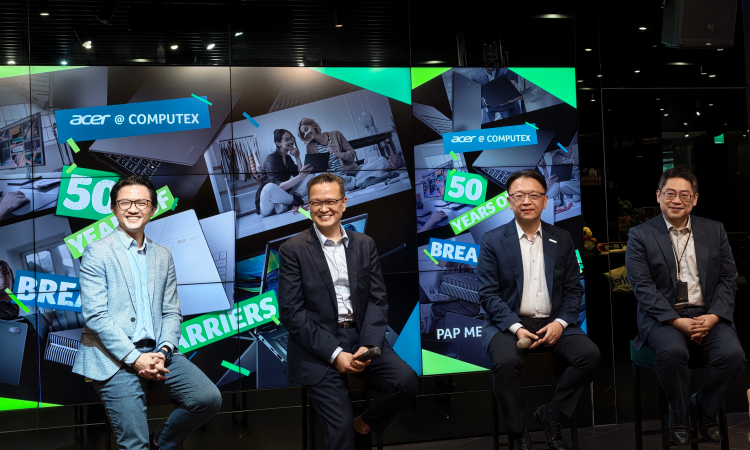
Overall, Acer executives outlined their strategies to combat market pressures, such as Apple’s price-competitive MacBook Neo. To stay competitive, Acer is leveraging the open Windows and Google ecosystems by partnering with diverse silicon vendors (including Intel, Qualcomm, MediaTek, and NVIDIA) to offer varied price points and advance hybrid, Agentic AI processing where closed systems have yet to mature.
Beyond its core PC roadmap of distinct Aspire, Swift, and TravelMate lines, Acer is expanding its non-PC subsidiaries, such as lifestyle appliances via Acerpure, specialized Edge AI enterprise infrastructure through Altos, and new opportunities in EV charging.
What do you think? We’re a bit sad that Acer doesn’t want to return to the smartphone market, but it’s clear that they have their own strategies in place. Share your thoughts in the comments below and stay tuned to TechNave.com

COMMENTS