
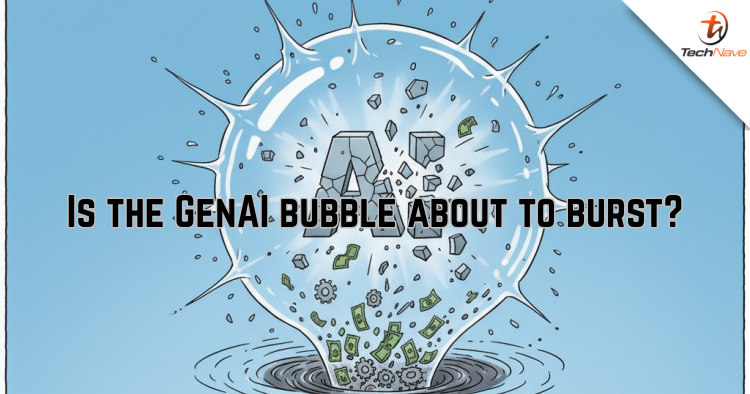
While the boom in Generative AI still continues to grow, there have been niggling signs that it could, in fact, share certain aspects with the dot.com bubble. Particularly, that it might burst soon, and we all know what happened back then, right?
Still, considering that the dot.com bubble did burst in the early 2000s, some of you might have forgotten (or weren't born yet!). As such, we thought it might be a good idea to revisit the lessons learned from that and what might happen if the AI bubble bursts too.
Revisiting the dot.com bubble burst - Lessons learned
The dot.com bubble happened approximately from 1995 to its peak on 10 March 2000, where startups, particularly those with a dot.com website, got huge investments without any actual proof of being profitable. Basically, if it had a .com behind it, people invested in it.
This bubble eventually burst, and many such dot.com startups failed. Investors lost a lot of money, and many economies went down… for a while. However, despite this, the Internet and the dot.com industry did not die.
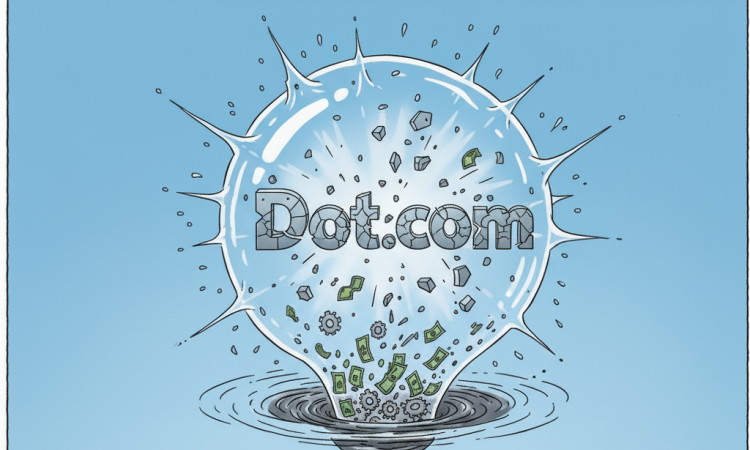
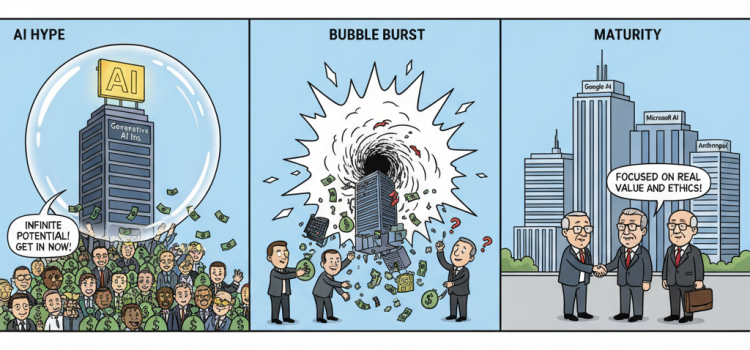
Instead of disappearing completely, the dot.com industry matured. While the number of dot.com services shrank, the leaders that were able to sustain profitability absorbed the useful startups and grew. The number of leading dot.com companies also decreased to just 1 or 2 for each specific service or industry.
Not all of the side effects of the dot.com bubble bursting were bad, though. Due to the massive investments, the network infrastructure required for such services also grew more robust, resulting in the faster Internet that we have today.
Another key side-effect was the acceleration of proper laws and legislation concerning the dot.com industry. Whereas, before it burst, many such laws and acts aimed to deregulate it more. After the burst, new laws were put in place to stabilise dot.com industry practices.
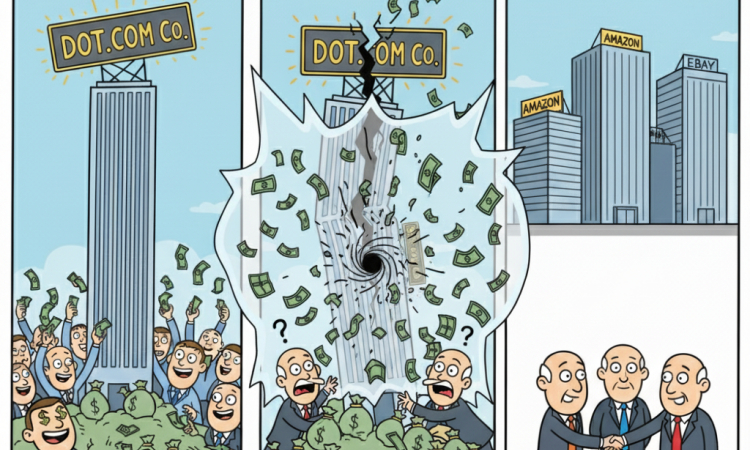
The Dot.com bubble - From Hype to Burst to Maturity
The Looming Generative AI Bubble - Predictions
With so many industry watchers and OpenAI saying that the AI market is in a bubble, the likelihood of it bursting seems very high. We just don't know when or how bad it might be, but we can make some predictions.
Just like with the dot.com bubble, we expect that if the AI bubble were to burst, the first thing to happen would be the massive failure of many AI startups. Those that had problems being profitable would be the first to go.
Investors would no doubt lose money, and the funding money could dry up. AI startups looking to survive would have to consider consolidation or working with what they have rather than expansion into new fields.
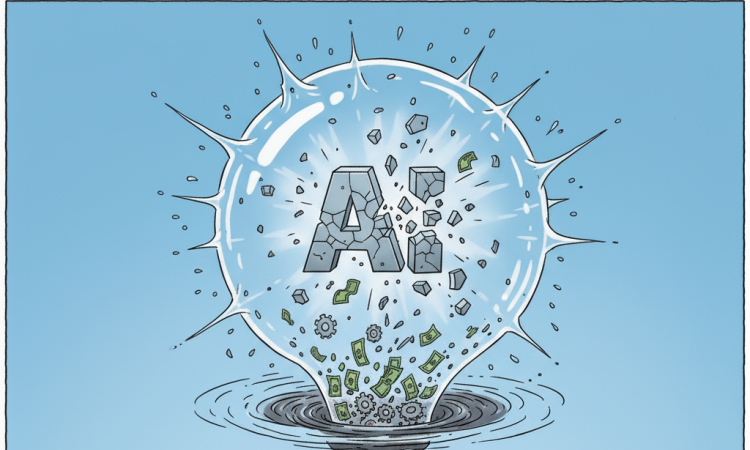
Profitable and useful AI startups would have other options, of course. If their fields align, they could get bought up by market leaders. While quite a few in the industry might lose their jobs, the lucky few skilled talent would transfer between these companies.
However, this maturing or thinning of the AI herd would also affect market leaders. The ones more likely to survive would be those with a more complete stack or ecosystem. Google's Gemini and Microsoft already have such robust stacks, and OpenAI seems determined to diversify its features as well.
While Meta and X lack these ecosystems, we expect that they would likely spin off their own versions of SLMs or Small Language Models across their social media networks. Anthropic and Google already have plans to collaborate, which could lead to more permanent integration.
Just like the previous burst dot.com bubble, not all side effects would be negative. The rapid development of GPU supercluster data centres could lay the foundation for more affordable and yet robust processing infrastructure for AI, much like how networks became more robust due to the rise of dot.com startups.
We'd also likely see an acceleration of enactment for laws and legislation that involve AI and generative AI. We'd like to see proper laws for copyrights and training data sourcing, but everything from data transparency and corporate accountability would likely get settled in a flash as well.
What would happen to AI Talent then?
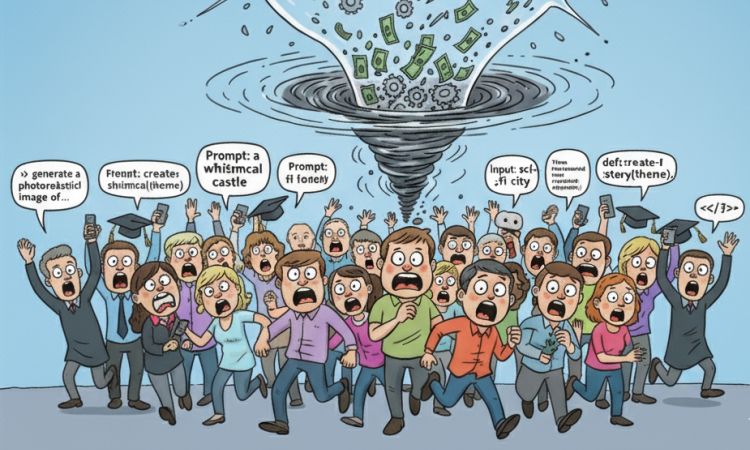
If you're already learning or working in AI, it seems that if you'd like to continue doing so, you should probably shift gears a bit. Rather than being just an engineer who builds new models, it might be better for you to seek out skills in AI integration or orchestration.
The ability to fine-tune existing models, SLMs and multi-agent systems over a bigger picture would probably be in higher demand. Ethics involving the use of AI and Gen AI would also be valued, especially if legislation involving them gets enacted quickly.
Conclusion - It might not be as bad this time?
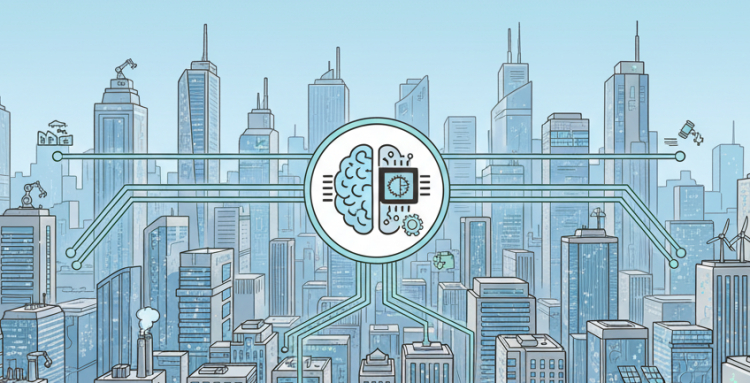
To be honest, rather than a sudden massive unexpected bubble bursting, most signs point towards a softer, more gentle slide into a refocusing of the AI industry. The dot.com bubble burst was a hard lesson already learnt by many in the same industry.
Of course, we're not saying that it won't happen, especially if AI startups and investors continue to do so blindly. History does tend to repeat itself like that after all. Just that if they've learned anything from the dot.com bubble, they should be able to apply it to the AI bubble as well.
In any case, what are your thoughts on how a potential AI bubble burst might reshape the tech industry? If Malaysians only use it to redraw themselves in various comic or art styles, we think most won't even notice it, but what do you think? Share your thoughts in the comments and stay tuned to TechNave.com for more updates.




COMMENTS