
Cybersecurity researchers from Kaspersky have uncovered a wave of Ramadan-themed online scams that attempt to hijack users’ Telegram accounts by impersonating government aid programmes. The scam campaign targets internet users by exploiting the festive season and the expectation of financial assistance during Ramadan. Victims are tricked into sharing personal information through fake websites that resemble official aid portals.
Fake “Bantuan Ramadan RM500” Aid Page Detected
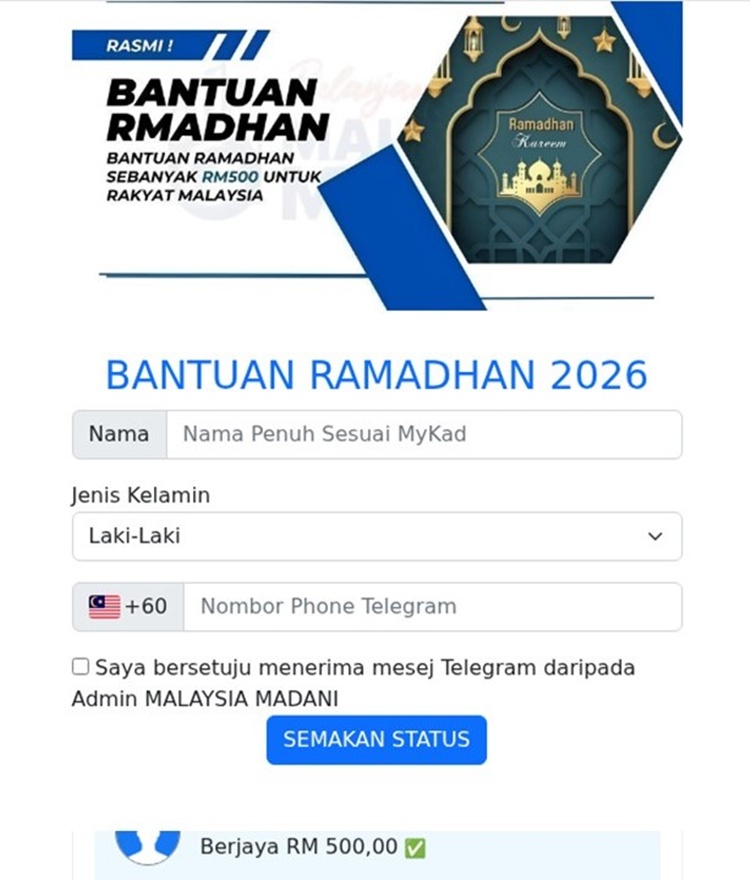
In one campaign identified by Kaspersky researchers, scammers created a webpage promoting a fake “Bantuan Ramadan RM500” financial assistance programme. The page prompts users to submit their personal details and phone numbers associated with their Telegram accounts.
The scam claims the information is needed to verify eligibility for festive financial support. However, the real objective is not immediate financial theft. Instead, attackers attempt to gain access to the victim’s Telegram account.
Hijacked Accounts Used to Spread More Scams
Once cybercriminals gain control of a Telegram account, they can use it to distribute scam messages or malicious links to the victim’s contacts. Because the messages appear to come from a trusted friend or family member, recipients are more likely to click the links or respond. This allows the scam to spread rapidly across social circles and messaging groups.
Cyber Threats Remain High in Malaysia
Festive scams are only one part of the broader cyber threat landscape affecting local internet users. According to Kaspersky telemetry, 18875669 different web-borne cyber threats were detected in Malaysia throughout 2025. The figure highlights the scale of ongoing online risks faced by users across the country. Authorities have also raised concerns about similar scams circulating during Ramadan.
Authorities Warn of Multiple Ramadan-Related Fraud Tactics
Malaysia’s National Security Council, also known as Majlis Keselamatan Negara, recently issued an advisory warning the public about several scam tactics linked to the fasting month. These include fake financial aid schemes such as e-Tunai offers, phishing messages disguised as iftar invitations or promotions, fraudulent zakat and donation appeals, and “belanja raya” scams promising festive rewards or financial assistance.
Tips to Avoid Ramadan-Themed Online Scams
Kaspersky advises users to remain cautious when encountering offers related to festive rewards or financial assistance. First, always verify before clicking on links sent through messaging apps, social media platforms or email, especially if they promise financial aid or special promotions.
Users should also check suspicious phone numbers or bank accounts using trusted anti-scam resources such as Semak Mule to see whether they have been reported for fraudulent activities. If someone becomes a victim of a scam, they should immediately contact the National Scam Response Centre by calling 997, which operates around the clock to assist scam victims.
Ramadan Promotion for Cybersecurity Protection
To help users strengthen their online protection, Kaspersky is offering up to 19% off its Kaspersky Premium plans during the Ramadan and Hari Raya period. Eligible purchases made before 31 March 2026 will also include a free RM30 Touch ’n Go reload pin. Stay safe and stay tuned for more trending tech news at TechNave.com.



COMMENTS