
The number of electric vehicles (EVs) in Malaysia is on the rise, but there are concerns about EV battery disposal that could pose a threat to the environment and the health of the people. With this, the government is initiating discussions with EV manufacturers to address the anticipated accumulation of nearly 900,000 depleted lithium-ion batteries by 2050.
Natural Resources and Environmental Sustainability Minister Nik Nazmi Nik Ahmad announced plans to introduce an Extended Producer Responsibility (EPR) initiative for EV batteries. Under this scheme, EV manufacturers would be held accountable for the end-of-life management of their batteries, including retrieval and recycling processes.
"If you manufacture EVs, you will also be responsible for the batteries at the end of their lifespan," Nik Nazmi stated during a recent interview. This includes the retrieval of the batteries for recycling or otherwise, and he emphasised the urgency of addressing the issue, noting that the number of EVs in the country is expected to increase significantly in the near future.
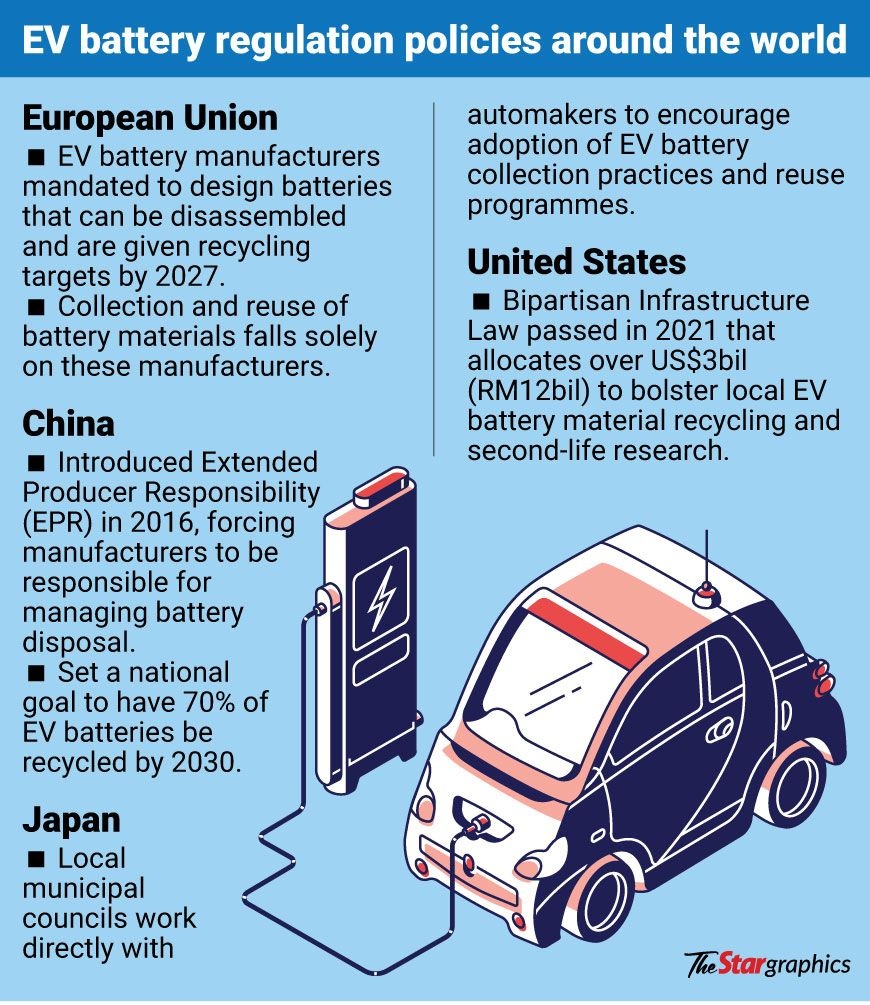
Environmental advocates have also called for the establishment of local recycling facilities and the development of an EV battery passport system. Such a system would track key battery information, facilitating better resource management and ensuring that batteries are either reused, repurposed, or safely dismantled.
The government is considering incentives, such as grants or tax breaks, for companies investing in recycling technology or utilising recycled materials. Additionally, there is a push for manufacturers to establish their own recycling facilities or partner with local recyclers, further strengthening Malaysia's circular economy ecosystem.
As Malaysia continues to promote EV adoption, the implementation of comprehensive battery recycling and repurposing strategies will be crucial in mitigating environmental risks and ensuring sustainable growth in the sector.






COMMENTS