
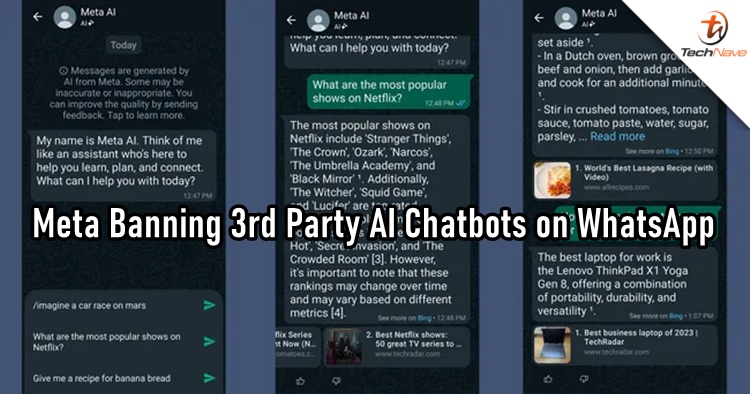
In a strategic pivot within the AI and messaging landscape, Meta Platforms has announced that starting 15 January 2026, it will prohibit third-party general-purpose AI chatbots — including well-known names like ChatGPT and Perplexity — from operating on WhatsApp via its Business API.
What Happened?
According to the updated policy, providers and developers of large-language models, generative AI platforms or “general-purpose AI assistants” will no longer be permitted to access or deliver such technologies as the primary functionality through WhatsApp’s Business Solution.
Meta describes this move as aligning with WhatsApp’s original purpose: to enable business-to-customer communication rather than serve as a distribution mechanism for consumer-facing AI assistants. The company claims that the surge in usage by AI chatbots created strain on infrastructure and deviated from the API’s intended design.
Meta changed its policies so 1-800-ChatGPT won't work on WhatsApp after Jan 15, 2026.
— OpenAI (@OpenAI) October 22, 2025
Luckily we have an app, website, and browser you can use instead to access ChatGPT.
For many users and developers, this means that if your preferred assistant lives inside WhatsApp, you’ll either have to move it out or migrate to the standalone app or website of that assistant. Meta’s in-house assistant — Meta?AI — remains unaffected and becomes the only officially supported general?purpose chatbot within the app ecosystem.
Does This Matter?
WhatsApp boasts more than 3 billion users worldwide, making it a critical distribution channel for any conversational AI. By closing off third-party access, Meta effectively reinforces its control over the chat-assistant experience, user data flows and monetisation paths. For competing AI providers, this move closes an important gateway into millions of users.
What to Watch
As January 2026 approaches, several things will unfold: we’ll see how developers respond (whether they build standalone apps or seek new integrations), how Meta optimises the infrastructure for Meta AI inside WhatsApp, and how regulators react, particularly concerning competition and consumer choice.
In short, Meta’s update marks a decisive moment in the messaging-AI interface: WhatsApp is shifting from being an open platform for assistants to a more closed, controlled ecosystem — and the implications will reach far beyond just chatbots. Stay tuned for more trending tech news at TechNave.com.



COMMENTS