

Today, Microsoft has officially launched the Malaysia West cloud region, marking a milestone in its commitment to support Malaysia’s digital and AI-driven future. This is the company’s first cloud region in the country and is strategically located in Greater Kuala Lumpur.
The cloud region features three availability zones, offering scalable, resilient, and secure cloud services with in-country data residency and reduced latency. This infrastructure will power services like Microsoft Azure, Microsoft 365, and Microsoft’s broader suite of business and productivity solutions. This move aligns with the Malaysian government’s ambition to become a regional leader in digital and AI capabilities.
Petronas is a key partner in the initiative, working with Microsoft to advance its own digital transformation and foster AI innovation. Other early adopters of the new cloud infrastructure include TNG Digital, SIRIM Berhad, SCICOM, FinHero, and Senang, with more expected to follow as demand for local cloud services increases.
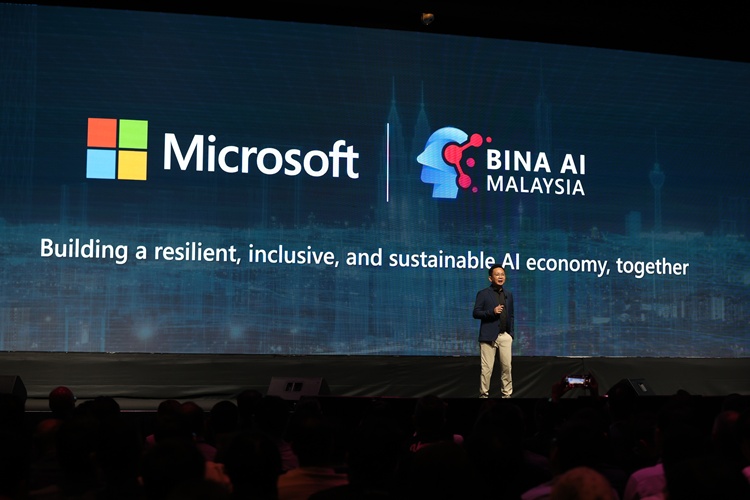
According to research by IDC, the Malaysia West region could generate US$10.9 billion in new revenue over the next four years and contribute to the creation of over 37,000 jobs, including nearly 6,000 skilled IT roles. At the same time, the company also announced BINA AI Malaysia, a national initiative designed to accelerate Malaysia’s AI readiness. The program includes plans to establish a Microsoft National AI Innovation Centre, envisioned as a hub for real-world AI applications, talent development, and cross-industry collaboration.
The centre is being developed in partnership with EY Malaysia, the National AI Office (NAIO) under the Ministry of Digital, and the Petronas Leadership Centre. This builds upon Microsoft’s US$2.2 billion investment announced in 2024 to fuel Malaysia’s digital and AI ambitions. Additionally, Microsoft is continuing the AIForMYFuture initiative, launched in late 2024, to equip 800,000 Malaysians with AI skills by the end of 2025. To date, 400,000 individuals across sectors have received training.
It was reported that the 400,000 individuals came from government agencies, educational institutions, startups, and underserved communities. Partners involved in the initiative include Biji-biji Initiative, IWFCIM, iTrain, PEOPLElogy, Pepper Labs, National TVET Council, and TalentCorp.






COMMENTS