
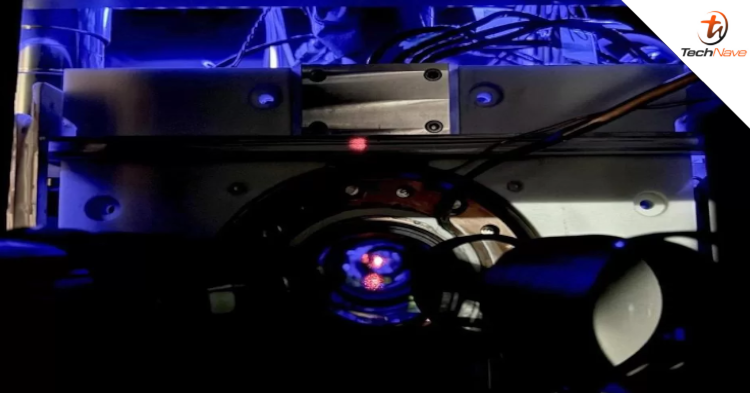
The first atomic clock was built in 1949 by scientists at the National Institute of Standards and Technology (NIST) to determine time more precisely. Now researchers from NIST and the University of Colorado Boulder have created a new, more precise atomic clock with an error of 1 second in every 30 billion years it has been in operation. So, what should you know about it?
For your information, this is a higher accuracy compared to the error of 1 second every 300 million years of previous atomic clocks. To achieve this higher level of accuracy, the caesium atoms used in previous clocks were replaced with strontium atoms. Cesium vibrates 9,192,631,770 times per second while strontium vibrates 429 trillion times per second. To measure these momentary vibrations, light waves were shone at strontium atoms in a vacuum chamber of gas.
With the new atomic clock in operation, the world's scientific community is ready to redefine the basic unit of a second, used since 1967. This will allow studies at the quantum scale to be carried out with greater precision of time estimation. Outside the lab, more accurate GPS systems could be developed. It is also useful for humans travelling in outer space in the future.
What are your thoughts about this news? Stay tuned for more news and updates like this at TechNave!






COMMENTS