
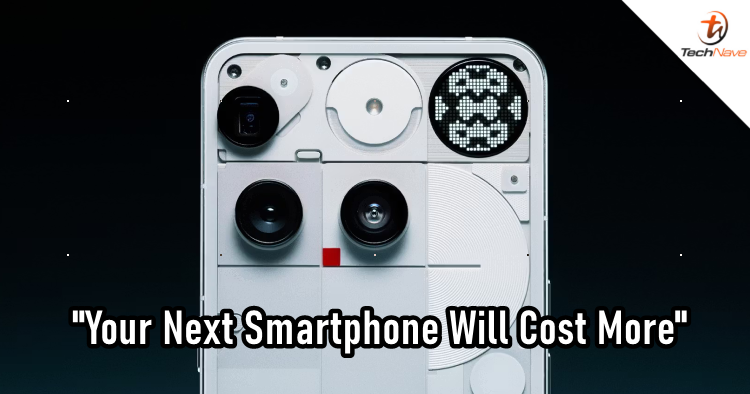
2026 already seems like all doom and gloom for the tech industry. Xiaomi's President and HONOR have already warned us about this due to the rising cost of memory chips. Today, Nothing co-founder Carl Pei took to X to warn that future smartphones may become more expensive, signalling a shift in industry dynamics that could reshape how devices are priced in the coming years.
Rising Component Costs
In his post, Pei pointed to increasing prices for key components such as memory chips as a major factor behind the impending shift. He suggested that some manufacturers may have to absorb rising supply costs by raising retail prices by as much as 30% or more, or alternatively choose to reduce hardware specifications to stay within previous price bands. This message comes as parts like LPDDR memory and advanced storage are no longer guaranteed to become cheaper over time, disrupting a fundamental assumption in smartphone economics.
Manufacturers May Shift Focus From Specs to Experience
Pei’s comments suggest a transition away from the so-called “specs race” that has dominated smartphone marketing for years. Rather than pursuing ever-higher benchmark numbers, manufacturers could prioritise design, user experience and software differentiation as ways to compete without escalating component costs. This approach could benefit companies that emphasise distinctive interfaces or integrated experiences over raw hardware metrics.
What This Could Mean for Consumers
For users, the message implies that flagship phone prices could inch upward in 2026 and beyond as the industry digests higher input costs and recalibrates product strategies. Consumers may see fewer dramatic annual hardware improvements in favour of refinements in software, design and specialised capabilities such as AI features or ecosystem integrations.
If Pei’s prediction proves accurate, the smartphone market could enter a new era where value is measured less by peak specs and more by overall product experience. So save your wallets, and stay tuned for more trending tech news at TechNave.com.




COMMENTS