
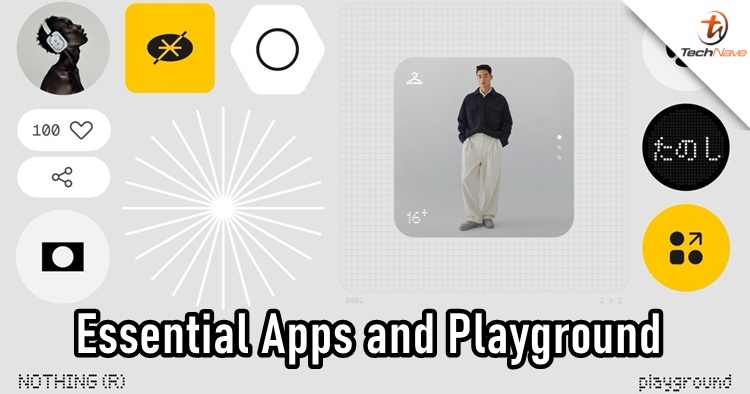
Today, Nothing reveals Essential — its first stride toward an AI-native operating system. According to the company, this isn’t just another UI refresh or skin, but a vision of a future where the software adapts to you, not the other way around.
Essential Apps: Build your own tools with words
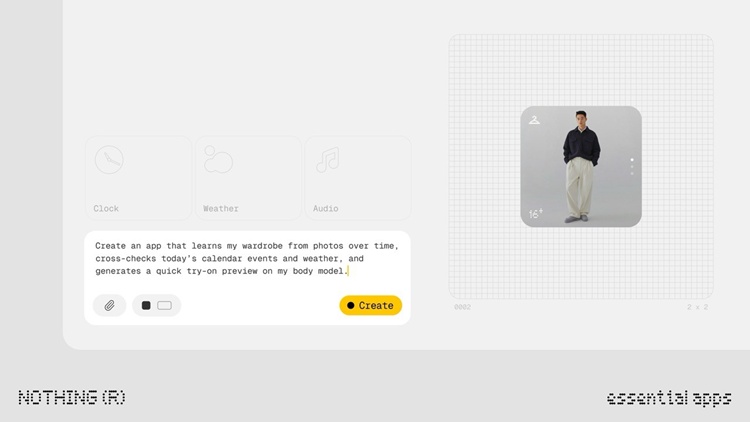
With Essential, users can create their own mini-apps on the fly using natural language. Nothing claims that you can simply pull receipts from your camera roll and convert them into a PDF, or produce a one-page briefing from your calendar and messages before a meeting, or a mood tracker that syncs with your music playlist. Simple prompts are all it takes.
This works by having the AI generate the app, which you then add to your home screen. To maintain performance, Nothing will cap how many Essential Apps you can run at once. On Phone (3), this means up to six widgets; on older models, up to two. Nothing intends to raise this limit over time, and Essential Apps is still in alpha — access is being rolled out gradually.
Playground: Where community innovations live
Playground is Nothing’s creative hub — a space where the community can build, remix, share, download, and experiment outside the constraints of traditional app stores. From Essential Apps to camera presets, EQ profiles, or “Glyph toys,” creators can contribute and explore freely. To build apps, you’ll need permission to create, which you can request via their site. The Playground is live for everyone at playground.nothing.tech.
Privacy, Openness, and What’s Next
Nothing is also pushing deeper with Essential Space, Essential Search, and the upcoming Essential Memory. Essential Space and Essential Search are already active, helping you capture ideas, curate inspiration, and find information instantly. As for Essential Memory, it is coming soon, and will begin surfacing forgotten details based on your habits — all private and local by design unless you explicitly choose cloud storage.
Nothing emphasises that all of this is private by design. Data stays local by default, with full transparency whenever cloud use is involved. But what do you think? Let us know, and do stay tuned for more trending tech news at TechNave.com.




COMMENTS