
Within a span of just ten days in October 2025, two cases made shocking news across Malaysia. First was a 16-year-old girl murdered by a schoolmate, followed by a 9-year-old brother who slashed his younger sibling. Both well-known stories have been linked to video games (and other media content), especially the latter on Roblox, and once again, this brought back the classic old question: Do video games make kids violent?
It's Not That Black and White
A question that is as old as a tale, news headlines often blame video games for aggression or violence in youth. In the aftermath, several local schools shared a list of 10 video games that are dangerous to children, which would have made sense if we were still in the 2010s and had access to locked console games. The government also announced that they are examining the licensing of 10 popular online games for users under 16, which closely matches today's gaming trend.
As much as the media love to spin it, most major studies (including those from the American Psychological Association, Oxford Internet Institute, and UNESCO) find no strong causal link between video games and violent behaviour in real life. If you're a long-time gamer like me, these lists seem to have been written by individuals who don't know much about gaming at all. I mean, they lost me by putting Tetris VR and Among Us in there.
Let me be clear, this is my personal opinion and does not represent the whole of TechNave. So, instead of worrying that games will "turn kids violent", it would be wiser to focus on the how, what, and why of gaming, not just the fact that kids like to play. So, let's get to it.
1. Excessive Screen Time Seems the More Likely Culprit
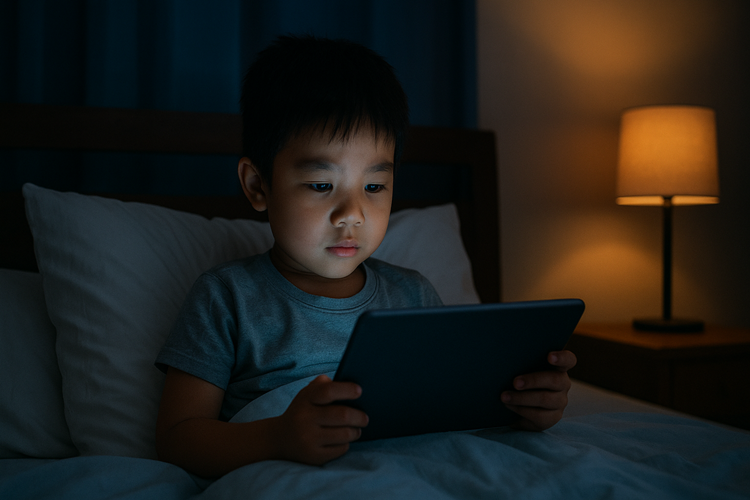
The Internet is vast, so parents need to know what their children are watching and playing
(image is AI-generated)
One of the biggest and most proven concerns isn't aggression, but time imbalance. It's not just long gaming hours at night, but letting children have excessive screen time, especially late-night sessions, which can lead to poor sleep, irritability, and academic decline. Adults are just as guilty, though, since many of us (including myself) also aimlessly "doomscroll" on social media before going to bed.
According to the SleepFoundation, it is always best to practice tech-free times (especially an hour before bed). This can help kids plan balanced daily routines, as well as help adults not to feel so groggy in the morning. We have written an opinion piece about What Can We Do About Children Having Too Much Screen Time before, so you can read more about that while you're at it.
Parenting is hard, we know. But gadgets (and games) cannot replace the role of parents in guiding content and usage. Even in their absence, they should not be considered a substitute for parents or caregivers, as quoted by Communications Minister Fahmi Fadzil emphasised during the hearing on considering banning Roblox.
2. In-Game Purchases Are Too Easy Now

If not supervised, your kids may engage in impulsive buying of items such as these
Compared to PC and console games that you can purchase a single time and play forever, free-to-play mobile games are designed in such a way that they keep the players engaged for the long term with attractive in-game items, loot boxes (with gambling-inspired mechanics) and cosmetic skins for game characters to stand out. If unsupervised, children may develop unhealthy spending habits just to chase digital rewards. Such as a case of how a Malaysian parent quickly cancelled a RM200 transaction when his children spent it on in-game items on Roblox.
Elsewhere, a 13-year-old teen in China once stole his mother's debit card and spent ~RM290,000 on a mobile game over four months. In Malaysia, scammers asked children to send their family members' debit or credit card information just so they could obtain in-game avatar skins. The cases aren't always about mobile games, though, as a 4-year-old once spent nearly RM900 on Lazada using his parents' credit card without their knowledge.
Parents are advised to set passwords (or even better: fingerprint or FaceID locks) to disable automatic purchases. Additionally, it's also important to sit down and talk with the children about how in-game items cost real money. If you're a gamer parent yourself, then better to educate your children (and your non-gamer parent friends) about these mechanics than regret it afterwards.
3. Game Content Isn't Always Age Appropriate
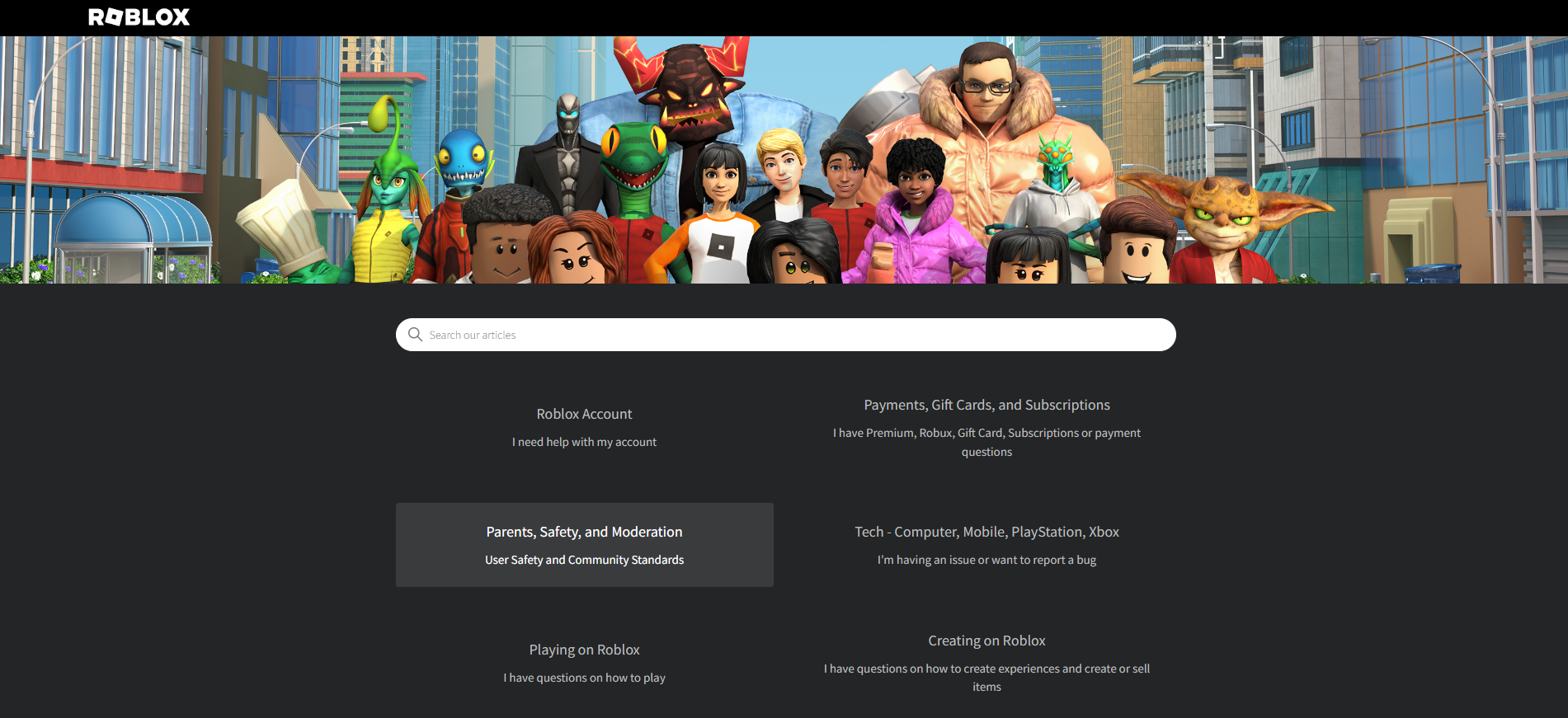
Just because it looks cartoony and innocent, it doesn't mean it is always safe for kids
Like movies, age ratings exist as well for video games. Would you let your kid watch an R-rated film for adults if they are still under 13? Of course not, but many parents are apparently not aware of this for video games. In the Roblox case, the 9-year-old wasn't supposed to be playing that in the first place, as it is clearly rated T for Teen (13+) from the ESRB.
It isn't just Roblox, but Fortnite, Mobile Legends, Dota 2, League of Legends and many more involve real-time chat and friend systems. And since anyone of all ages can play these games, risks include cyberbullying, grooming, scams and toxic behaviour. If you have played any MOBA games, you know how ugly the chat room can be when conversations become heated.
Studies have suggested that parents in this digital age should actually play together with their children, so that they will understand the social dynamics and the gaming content. At the same time, they can use the opportunity to teach kids to never share personal info and how to report or block other users.
4. Regulating Emotional Outbursts
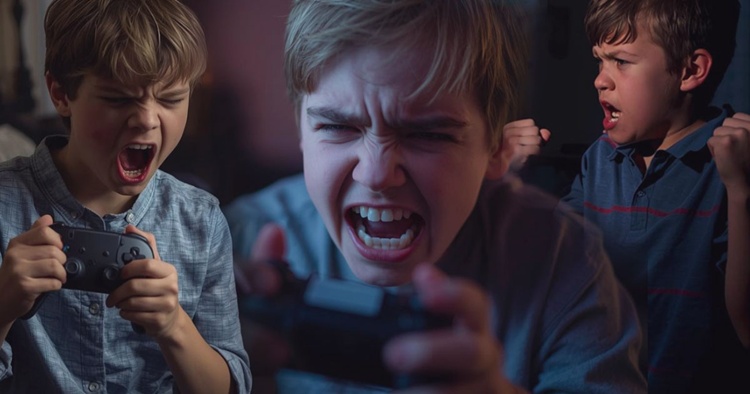
We all know that one kid who can't stand losing
(image is AI-generated)
Speaking of participating in gaming time with children, I believe this can be applied to playing sports together as well. This is because, like any kind of sport, games can also trigger strong emotions from excitement to disappointment. Games today are designed to be challenging, which can build persistence, but can also create frustration.
You know it, I know it: everyone loves a big "W". But when kids lose or face tough challenges, they may show emotional outbursts or anger when losing. Without guidance, kids will not learn how to manage these feelings, which are part of developing emotional regulation, an essential life skill when they grow older.
Studies show that children who struggle with emotional control are more likely to develop gaming problems later on, not because games cause anger, but because they amplify existing issues. However, gaming can also help build emotional resilience if guided properly. Some research even shows that specially designed games with relaxation or biofeedback tools can improve anger management in children.
Personally, I always carry this rule with me, whether it's for gaming, sports or any kind of team-building activities: If you're not having fun, then you should stop playing. Games are supposed to be fun, and yes, winning is fun too, but winning isn't everything.
The Bigger Picture: Balance and Context
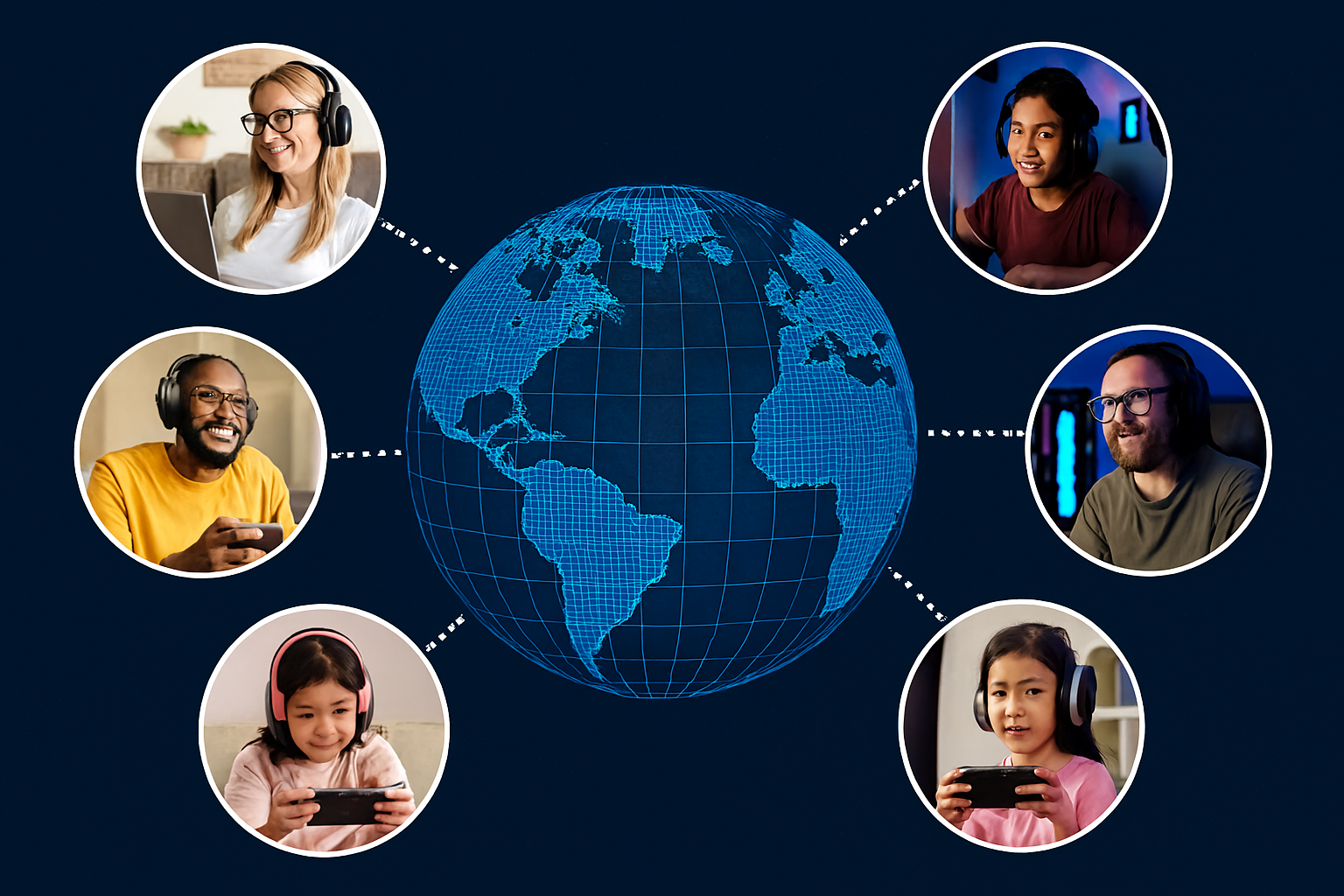
There are billions of peaceful gamers around the world,
so it just doesn't make sense to blame games alone for "violence"
(image is AI-generated)
There are approximately 3.32 billion active gamers globally. So if games really encouraged us to become violent, then that's like blaming car crashes on Hot Wheels or Overcooked for setting the kitchen on fire while cooking. Moreover, the major cities around the world would have already fallen into chaos and become collapsed societies by now, don't you think?
Games themselves aren't the problem, and I'm not trying to point fingers at the lack of parental supervision as well. After all, many boomer-generation parents also struggled to keep up with the digital transformation phase, yet the majority of millennials (like me and you) turned out fine, right?
We went through the likes of the early Internet chat platform days (mIRC, ICQ, MSN, etc) without much supervision, gaming in cyber cafes (although there were some unfortunate incidents before) and Pokémon, the highest-grossing media franchise of all time, was once accused of being "satanic". Even Dungeons and Dragons, the role-playing board game in the 80s, was also a scapegoat due to the death of a young teen who suffered from depression and drug addiction.
Gaming, when done in balance and with supervision, can be a positive part of a child's development. For example, research shows that children who play games sometimes outperform non-players on tasks measuring working memory and impulse control. Games can also offer opportunities for creativity and building relationships (especially in multiplayer or cooperative formats), and for learning how to fail and try again, which are important life skills.
Conclusion: It All Begins At Home

Bottom line: Spend more time with your children (and it doesn't have to be gaming)
(image is AI-generated)
Whether you like it or not, gaming is already a part of pop culture and children's lives, so gaming is here to stay. Granted, maybe it is easier to just ban games like Roblox, but kids are just going to find another game or something else, and the cycle repeats with another scapegoat, as seen throughout the years. If two football fan groups got into a fight and someone accidentally dies because of a football argument, should we just ban football then?
Rather than viewing games (and gadgets) as threats, they can also be great tools when guided wisely, which can spark creativity, teamwork, and problem-solving. The best protection isn't restriction, but the real difference begins at home: by asking questions and sometimes playing alongside their children, parents turn screen time into a shared time where learning, connection, and confidence can grow.
Once again, this opinion piece is my own personal view. It does not represent TechNave. To end this, here's a quote by Jonathan Haidt in his book "The Anxious Generation" for you to ponder, as it resonated with me:
"We are overprotecting our children in the real world, while underprotecting them online. If we really want to keep our children safe, we should delay their entry into the virtual world and send them out to play in the real world instead."
But what do you think? Let us know in the comments below, keep it real, and stay tuned for more trending tech articles only at TechNave.com.


COMMENTS