
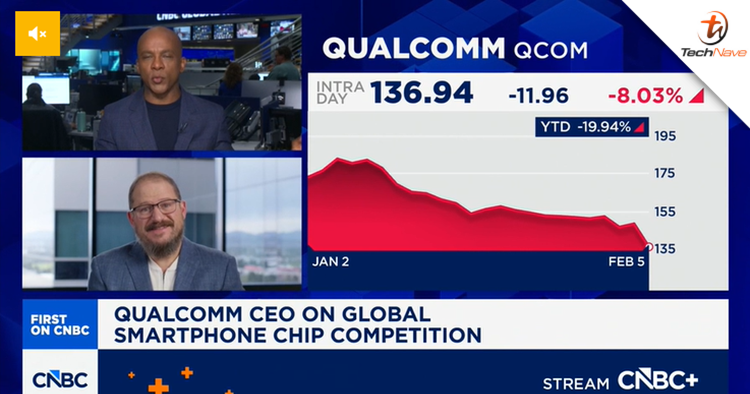
Shares of Qualcomm fell sharply this week after the company issued weaker financial guidance for the current quarter, warning that a global memory chip shortage is weighing on the smartphone market and constraining demand for its mobile chips. The outlook disappointed Wall Street following Qualcomm’s fiscal first-quarter earnings release, triggering a sell-off in after-hours trading as investors absorbed the supply chain challenges.
Earnings Beat But Forecast Falls Short
Qualcomm reported fiscal first-quarter revenue of about $12.25 billion, topping analyst estimates, and delivered an adjusted earnings per share that beat consensus forecasts. Despite these positive results, management’s forecast for the second quarter came in below expectations, with revenue and profit projections that fell short of Wall Street’s estimates. This softer guidance was attributed primarily to ongoing shortages and soaring prices for memory chips, which are essential components paired with Qualcomm’s processors in smartphones.
Memory Shortage Hits Smartphone Supply Chains
The global memory chip shortage stems from tight supply across DRAM and NAND markets, driven in part by strong demand for memory-intensive artificial intelligence applications and production capacity reallocations toward high-margin data centre components. As a result, many smartphone makers are facing difficulty securing enough memory for their devices, prompting them to adjust production and inventory plans. This constraint is expected to curb smartphone shipments and reduce orders for key parts such as Qualcomm’s mobile processors.
Market Reaction and Broader Chip Industry Impact
Following the earnings release and forward outlook, Qualcomm’s stock sank as much as about 10%, reflecting investor concerns that the memory shortage could continue to dampen near-term growth in the mobile segment. Analysts have noted that memory supply constraints could persist through 2026 and into 2027, potentially suppressing the broader smartphone and consumer electronics markets and prompting industry participants to prioritise memory allocation for premium devices.
Strategic Shifts and Longer-Term Goals
Despite the near-term headwinds, Qualcomm’s leadership has emphasised that the company’s diversification into areas such as AI-oriented data centre chips and other high-growth segments could help offset weakness in smartphone chip sales. The firm expects to launch new AI hardware later this year with memory supply secured for those products, even as it navigates wider supply chain constraints affecting handset production.
Analysts remain focused on how memory pricing and availability trends will influence demand patterns across consumer and enterprise technology sectors throughout 2026. Stay tuned for more trending tech news at TechNave.com.






COMMENTS