

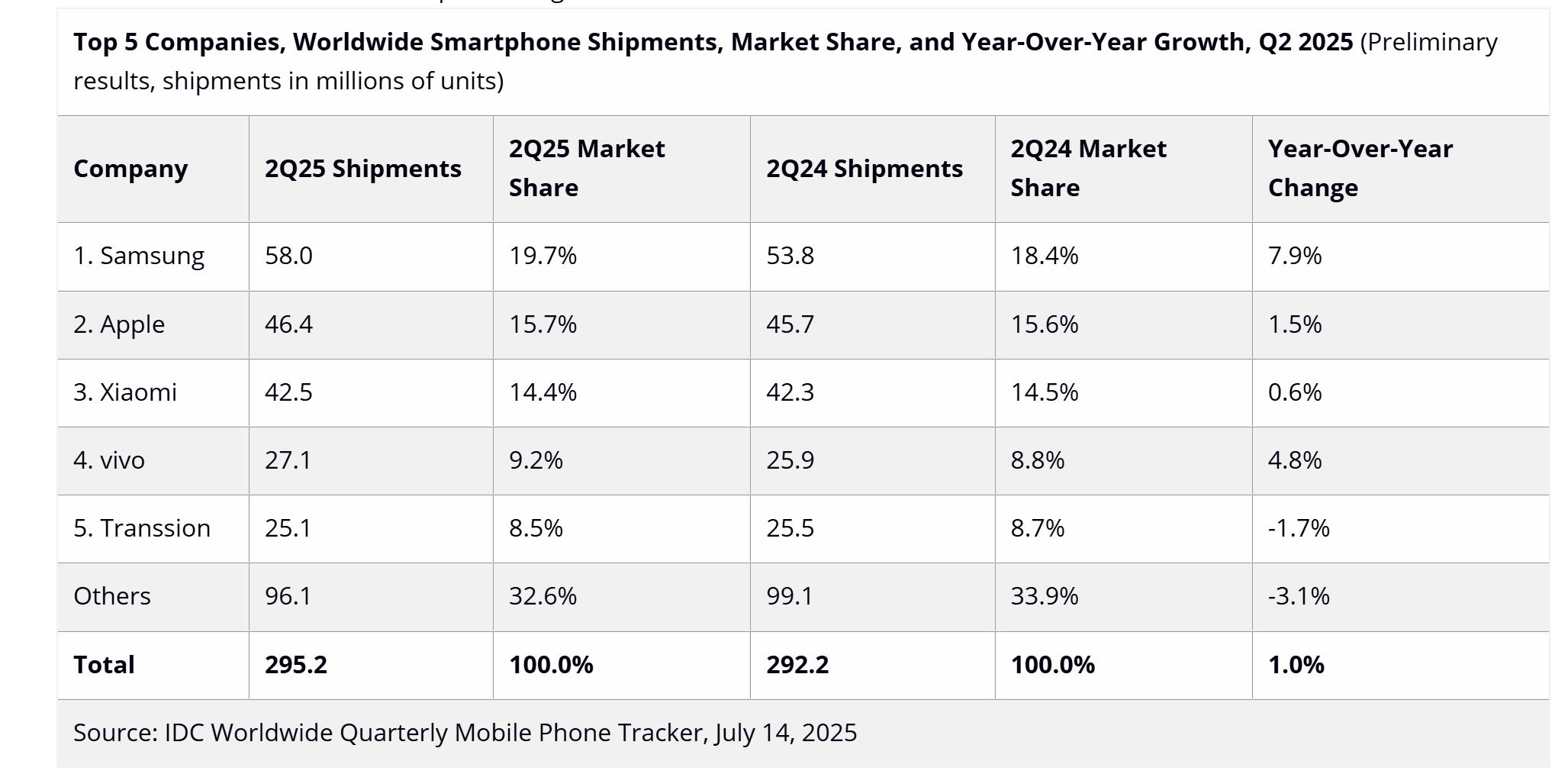
The International Data Corporation (IDC) has revised its 2025 global smartphone shipment forecast downward to just 0.6% year-on-year growth, down from an earlier projection of 2.3%.
Despite slowing demand, the average selling price (ASP) is expected to remain steady at approximately USD 434 (RM1900), driven by continued demand for higher-end smartphones.
Smartphone market faces slower recovery
IDC now expects global smartphone shipments to reach 1.24 billion units in 2025, a modest improvement from 2024. However, the reduced forecast reflects persistent challenges including inflation, global trade tensions, and cautious consumer spending.
These factors are slowing recovery in many regions and stretching replacement cycles, particularly in mature markets.
Over the next five years, the smartphone market is forecast to grow at a compound annual growth rate (CAGR) of 1.4%, indicating a slow but steady rebound.
Regional insights: China and the U.S. diverge
Growth in China is projected to reach around 3%, supported by government incentives that are helping Android vendors recover market share. However, Apple's global shipments are expected to decline by 1.9%, primarily due to stronger competition from Chinese brands like Huawei and shifting consumer preferences.
In the United States, shipments are forecast to grow by 1.9%, down from the previous estimate of 3.3%. Despite this slowdown, consumer upgrades continue thanks to trade-in offers and extended financing programs from major mobile carriers.
Average prices stay high as premium devices dominate
IDC predicts the average selling price (ASP) of smartphones will remain close to USD 434 (RM1900) in 2025. This is largely due to the continued popularity of premium models and the limited appeal of low-end devices in major markets.
By 2029, ASPs are expected to dip slightly to USD 424 (RM1850), suggesting a stabilisation of pricing as component costs decrease and manufacturers target mid-range segments more aggressively.
Android gaining momentum
Android devices are projected to grow around 40% faster than iPhones over the next few years. This trend is driven by increasing demand in emerging markets such as India, Indonesia, and parts of Southeast Asia, where affordability and feature-rich devices are highly valued.
In Malaysia, this may translate to broader availability of competitive Android devices across different price tiers, especially from Chinese brands aggressively expanding into ASEAN markets.
Is smartphone innovation slowing, or are users just becoming more selective with their upgrades? How do these global trends impact your next buying decision?
Stay tuned to TechNave.com for more updates.



COMMENTS