
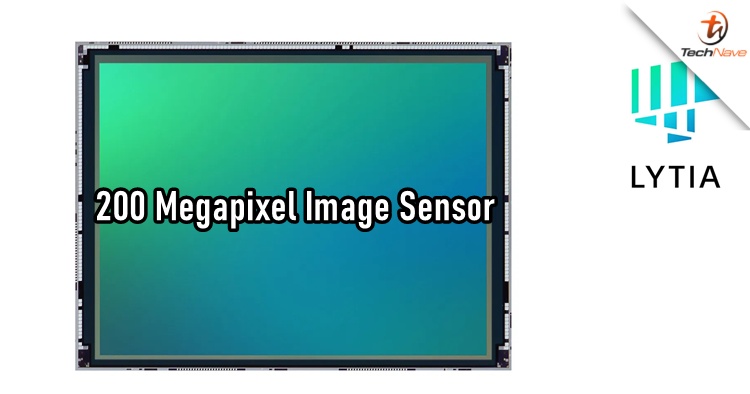
Sony has announced the upcoming release of a new mobile image sensor, the LYTIA 901, for smartphones — a 1/1.12-type stacked CMOS sensor achieving approximately 200 effective megapixels. The sensor is slated for mass production, shipping in November 2025.
This launch marks a significant upgrade in mobile photography components, combining very high resolution with improved sensitivity and advanced on-sensor image processing.
Quad-Quad Bayer Coding + On-Sensor AI Remosaicing for Zoom and Low Light
At its core, the LYTIA 901 uses a Quad-Quad Bayer Coding (QQBC) pixel array, a design where 16 adjacent pixels of the same colour are grouped. In normal shooting, these aggregated pixels function as a larger “super-pixel,” delivering high sensitivity suited for low-light or night conditions.
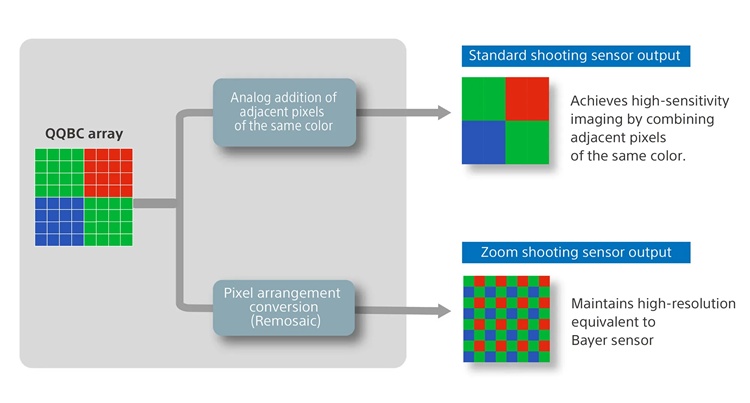
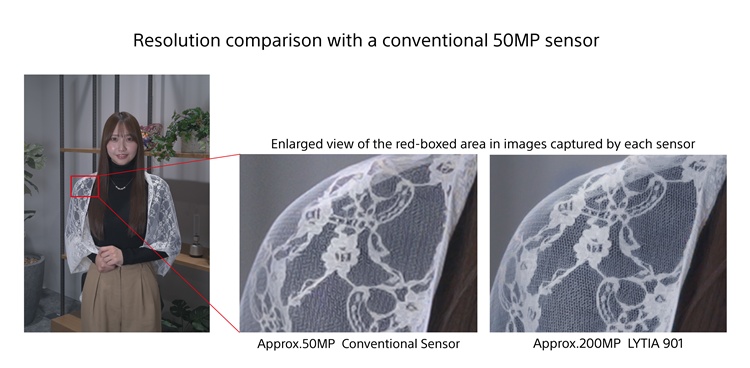
When zooming or when high resolution is required, the sensor applies an AI learning-based remosaicing process, essentially converting the grouped pixels back into a standard pixel layout. This allows the camera to output detailed, high-resolution images even when zoomed, while maintaining good sensitivity when light is limited. Sony says this AI-driven processing is done directly inside the sensor, enabling high-speed remosaicing and better detail rendering.
Impressive Specs: Resolution, Sensor Size and Zoom-Ready Performance
The official spec sheet for LYTIA 901 lists these key technical details: a 1/1.12-type sensor (14.287 mm diagonal), 0.7 µm pixel pitch, approx. 200-megapixel effective resolution. Thanks to the QQBC + AI remosaicing design, the sensor supports up to 4× zoom on a single lens, delivering high definition even with zoom.
For video and high-performance shooting, Sony claims the sensor can support up to 30 fps high-quality video capture with zoom and handle high-dynamic-range (HDR) imaging across zoom levels.
Advanced HDR and Dynamic Range
Beyond high resolution, LYTIA 901 also houses multiple HDR technologies. This includes Dual Conversion Gain HDR (DCG-HDR) and a 12-bit ADC (analogue-to-digital converter), raising colour fidelity and tonal depth. The sensor can also handle Hybrid Frame-HDR (HF-HDR), which combines multiple exposures to deliver dynamic range beyond 100 dB — useful for scenes with bright highlights and dark shadows.
These features mean that whether you’re shooting in bright daylight, indoors under challenging lighting, or at night, the sensor aims to capture rich detail, accurate colours and balanced exposure, all while maintaining high resolution or zoom capabilities.
What It Means for Smartphones (and Users)
With LYTIA 901, phone makers now have access to a sensor that combines flagship-grade resolution, sensor size, and advanced processing, offering a strong alternative for mobile cameras that aim for high-detail photography, versatile zoom, and compelling low-light performance.
The on-sensor AI remosaicing and enhanced HDR suggest future smartphones using LYTIA 901 could produce high-quality images from a single lens that rival multi-lens or periscope-zoom setups, especially useful for everyday users who value versatility as much as quality.
The introduction of 200-megapixel sensors like LYTIA 901 may shift the mobile photography landscape, emphasising intelligent sensor design over simply adding more lenses. But we shall wait and see, so until then, stay tuned for more trending tech news at TechNave.com.




COMMENTS