
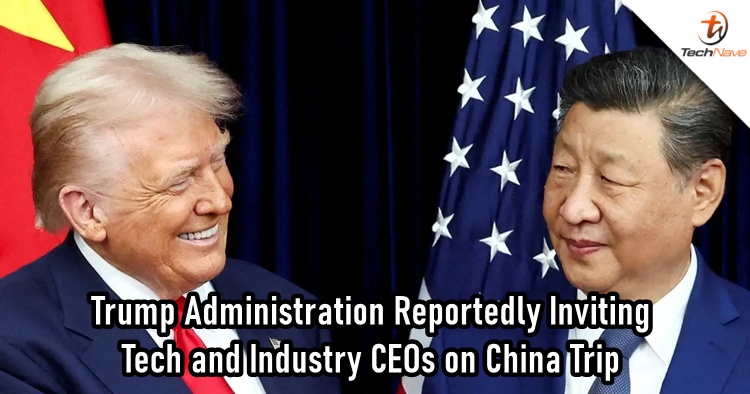
The administration of Donald Trump is reportedly planning to invite several major American business leaders to accompany the president on an upcoming visit to China. According to reports, executives from companies including NVIDIA, Apple, ExxonMobil, Boeing, and Qualcomm are among those expected to receive invitations.
Tech Giants Could Play Key Role in US-China Discussions
Among the most closely watched names are Apple CEO Tim Cook and NVIDIA CEO Jensen Huang, particularly given the ongoing tensions surrounding semiconductor exports, AI development, and supply chain dependencies between the US and China. Reports also suggest that Qualcomm CEO Cristiano Amon is expected to attend if the trip proceeds as planned. Financial and industrial giants including Citigroup, Visa, Blackstone, and Boeing, are also believed to be part of the broader invitation list.
While expectations for major agreements remain uncertain, analysts believe discussions could revolve around trade relations, AI technologies, semiconductor access, and large-scale industrial deals. Boeing in particular is reportedly hoping the summit could help unlock a long-discussed aircraft order from China involving hundreds of 737 MAX jets.
The involvement of technology companies is especially significant as the US and China continue to navigate export restrictions on advanced AI chips and semiconductor technologies. NVIDIA’s position remains under heavy scrutiny due to its importance in the global AI race and China’s continued demand for high-performance computing hardware.
Why This Matters for Malaysia and Southeast Asia
For Malaysia and the wider Southeast Asian market, the outcome of these US-China discussions could carry broader implications across technology manufacturing, semiconductor supply chains, and AI infrastructure investments. Malaysia remains one of the world’s key semiconductor assembly and testing hubs, with major American companies including Intel, NVIDIA, AMD ecosystem suppliers, and Apple manufacturing contractors, maintaining operations within the country.
Any easing or escalation in US-China tech restrictions could indirectly impact regional supply chains, investment flows, and future AI infrastructure deployments across Southeast Asia. With AI now viewed as a strategic economic and geopolitical priority, meetings involving companies like NVIDIA, Apple, and Qualcomm are increasingly carrying implications far beyond traditional trade diplomacy. Stay tuned for more trending tech news at TechNave.com.




COMMENTS