
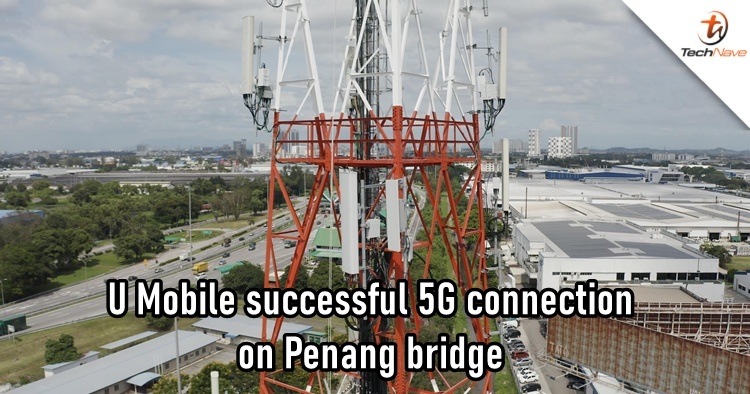
Yesterday, U Mobile set a groundbreaking benchmark in the telecommunications industry. By teaming up with Huawei and using its Meta Active Antenna Unit (MetaAAU) technology, U Mobile achieved over 120Mbps of 5G network coverage during a trial run across the 13.5km of the Penang Bridge.
For context, it has been a challenge for travellers to get consistent coverage, requiring a 4G base station in the middle of the bridge to maintain connectivity. It took years to resolve this issue but it seems U Mobile has done it. By applying Huawei’s MetaAAU technology, which uses an Extremely Large Antenna Array (ELAA) and beamforming algorithms to double antenna elements, enhancing coverage distance and improving edge user experience by over 30%.
The MetaAAU sites are strategically positioned at each end of the Penang Bridge, thus eliminating the need for a base station in the middle of the bridge. Additionally, it also features an innovative “0 Bit 0 Watt” mode, which allows modules to shut down up to a rate as high as 99% during low-traffic periods. The system can reactivate within minutes when traffic demand increases, ensuring optimal energy use while maintaining efficient, high-quality performance.
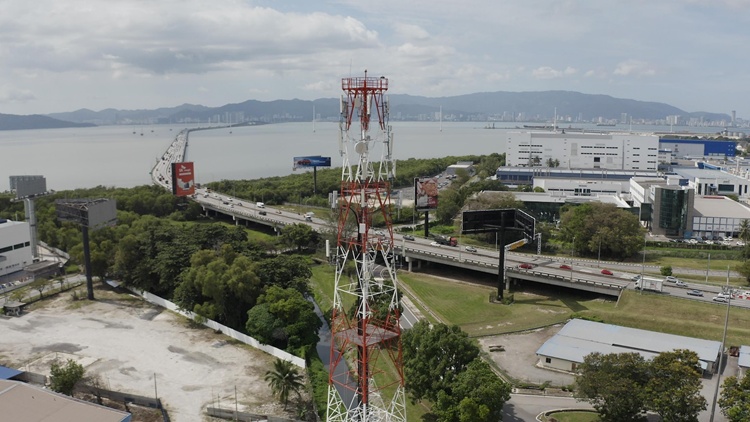
The trial demonstrated that users experienced minimum network speeds of 120Mbps, with an average of 597Mbps and zero dropped calls even at vehicle speeds of 80km/h. U Mobile said once the 5G network is commercialised and made available to the public, passengers and commuters on the first Penang Bridge can enjoy smooth 4K video viewing, seamless short video switching, mobile gaming on the go, and even HD live broadcasts.
Woon Ooi Yuen, Chief Technology Officer of U Mobile was proud that the orange telco successfully completed this 5G trial with Huawei. With 5G-A, he said U Mobile will provide future enterprise use cases along the bridge, such as road safety services, surveillance with AI capabilities, and drones for emergencies.




COMMENTS