
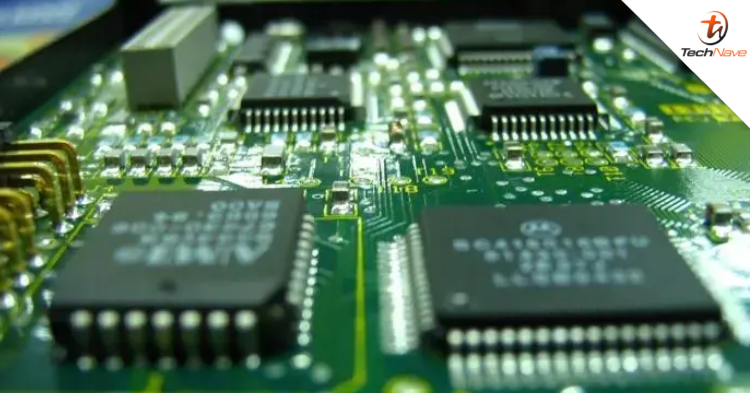
On 4 July 2025, the United States announced draft plans to restrict exports of advanced AI chips to Malaysia and Thailand.
While no pricing or tariffs were disclosed, the policy could affect regional semiconductor supply chains and AI development—especially for data centres relying on U.S.-made chips like those from Nvidia.
Why it happened
The U.S. government is preparing new export controls that would require American companies to obtain licenses before sending cutting-edge AI chips to Malaysia and Thailand.
The move is aimed at tightening oversight on chip distribution, especially to prevent these products from being redirected to China through third-party countries in Southeast Asia.
Although still in draft form, the policy is expected to be finalised in the coming months.
Malaysia will be affected too
The plan reflects concerns within the U.S. administration that countries such as Malaysia and Thailand may be used as transshipment hubs, allowing restricted AI chips to reach Chinese entities.
Malaysia has seen a surge in imports of advanced GPUs, particularly Nvidia’s H100 and A100 chips, used for large-scale AI model training. Some of these chips have allegedly ended up in Chinese-operated server farms hosted in Malaysia.
According to reports, Chinese firms have rented local data centre capacity in Malaysia and Thailand to bypass existing export bans.
There have also been claims of engineers physically transporting hard drives and components—such as GPUs—in luggage to these countries. The Malaysian Ministry of Investment, Trade and Industry (MITI) has stated it is currently investigating these reports.
Under the proposed rules, exporters would need special licenses to ship high-performance chips to Malaysia and Thailand. However, U.S. firms and companies from allied countries may receive temporary exemptions or fast-track clearances.
The policy is part of broader efforts to simplify and strengthen the AI diffusion rule, a set of export controls originally introduced under the Biden administration.
The Biden-era framework had grouped countries into tiers, but enforcement proved difficult due to complex criteria.
The Trump administration, now in office, is seeking to streamline the process and focus on high-risk routes of circumvention—of which Southeast Asia has become a key concern.
What does it means for Malaysia?
This development also comes as the U.S. maintains its push to limit China’s access to technology critical to AI and semiconductor advancement.
The policy may disrupt supply channels for AI hardware in Southeast Asia, especially as Malaysia is rapidly growing as a regional hub for chip testing, packaging, and cloud infrastructure.
Will stricter export controls slow down Malaysia’s ambitions to become a regional AI and chip manufacturing powerhouse? How will this affect pricing, supply, and project timelines for data centres in the region?
Let us know your thoughts. Stay tuned to TechNave.com for more updates.




COMMENTS