
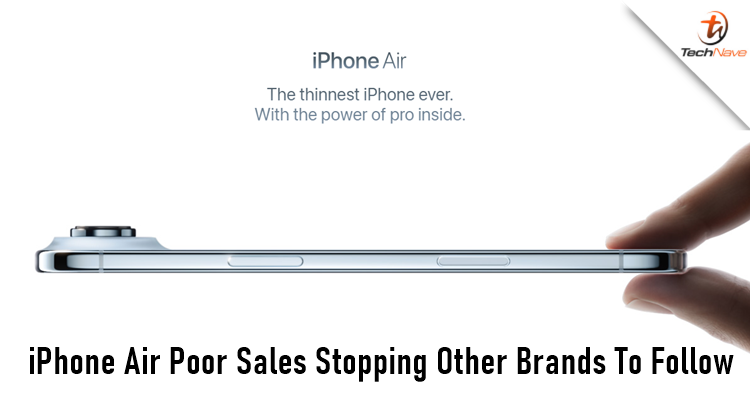
While the iPhone Air is an engineering marvel in terms of size, reports of sales don't really reflect that. Since its launch in September 2025, iPhone Air has reportedly underperformed. According to these industry sources, some of Apple’s suppliers have already scaled back or halted production lines meant for the Air after sluggish demand.
Chinese Brands Freeze or Cancel Ultra-Slim Phone Projects
With this, recent reports point to the disappointing market performance of the iPhone Air as a key reason why several major Chinese smartphone brands have stepped back from developing their own ultra-slim “Air-style” devices. This slump has prompted rival manufacturers to rethink whether ultra-thin phones remain a viable direction, at least within current price and specification tradeoffs.
Manufacturers such as Xiaomi, OPPO and vivo are reportedly among the firms that have “paused or cancelled” their plans for ultra-slim devices. According to supply-chain sources cited by media reports, the poor demand seen for the iPhone Air has discouraged them from following that path. This is due to the combination of challenges, such as weaker battery life and limited camera hardware in ultra-slim designs.
This marks a rare moment of divergence, considering how frequently Chinese brands have historically followed global design trends driven by Apple. The shift indicates a reevaluation of priorities: consumers might now value more balanced feature sets (battery capacity, camera versatility, performance) over extreme thinness.
Why Slimness Alone May No Longer Sell
The iPhone Air was marketed heavily on its design, boasting a very slim profile. But to achieve that thinness, sacrifices were made: battery capacity was smaller, and the camera array was simplified compared to other flagship models.
For many consumers, reviewers argue, such trade-offs undermine the practical value of a premium device. As a result, even though slim phones might look sleek, they may not meet the performance or functionality expectations of typical smartphone users, especially for battery life, photography, or multimedia usage.
What This Means for the Future of Smartphone Design
The retreat from ultra-thin phones suggests the industry may be shifting toward more balanced designs where battery life, hardware capability, and versatility take precedence over purely aesthetic thinness. Chinese manufacturers appear to be following suit, redirecting development resources from “slim-phone experiments” to devices with more conventional and consumer-friendly proportions.
In other words, this is likely the last time that we could ever see the iPhone Air, and perhaps alongside the Samsung Galaxy S25 Edge. Until then, stay tuned for more trending tech news at TechNave.com.


COMMENTS