
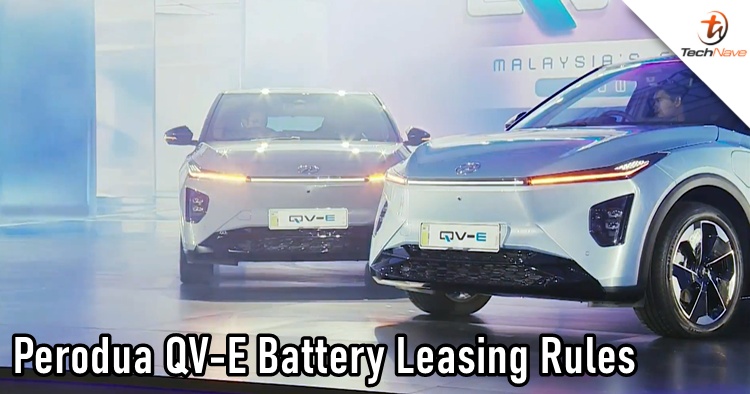
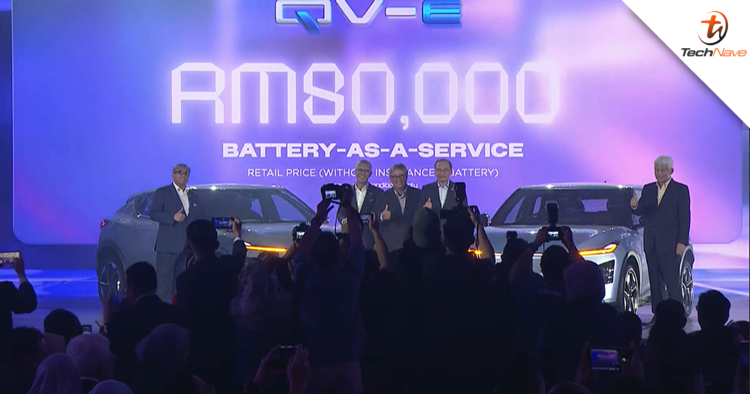
The Perodua QV-E is probably one of the biggest news stories this week. Not only that, this locally made EV comes with a Battery-as-a-Service (BaaS) leasing plan, and some warranty warnings if you actually miss your monthly payment. Here's what buyers need to know before getting the QV-E.
How Does Battery Leasing Work?
As the first to introduce BaaS, many consumers may be confused about how the battery lease mechanism works and what happens if you miss payments. While the QV-E is priced at RM80000, that cost covers only the car itself; the battery is not included. Instead, every buyer must sign on to a nine-year BaaS leasing plan, paying RM 275 per month (excluding SST).
Perodua designed this model to take battery ownership, maintenance, replacement, and disposal out of the buyer’s hands, easing concerns over battery degradation and the high cost of replacing EV batteries — historically a worry for EV adopters. The plan also includes warranty coverage: if the battery’s state of health (SoH) drops below 70%, Perodua promises a replacement battery, giving owners peace of mind about long-term usability.
When buyers take a car loan for the QV-E, the battery lease is often bundled with the vehicle financing, so consumers make a single monthly payment to the bank; afterwards, any remaining lease payments are made directly to Perodua via its app.
Missed Payments Could Render Your QV-E Undrivable
A critical caveat has emerged: the monthly lease isn’t optional. Recent reporting from an automotive site reveals that if a QV-E owner misses two consecutive months of battery-lease payments, the car’s battery — and therefore its ability to start — will be remotely disabled. If payment is missed for three months in a row, the lease agreement is subject to termination. Once terminated, Perodua reserves the right to recover the battery pack.
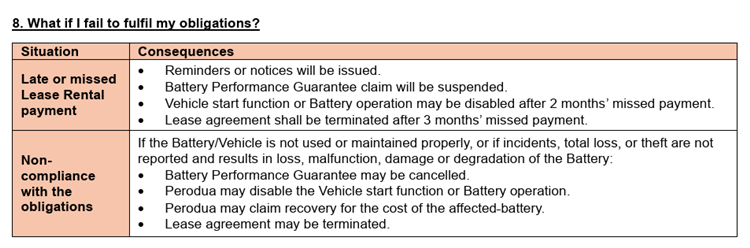
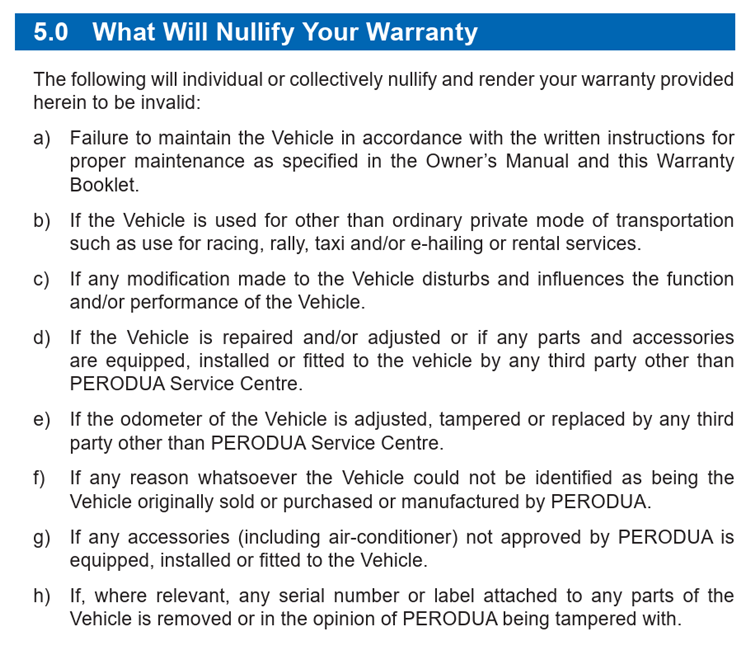
This has triggered concerns among potential buyers, especially around whether such a model effectively turns EV ownership into a “subscription to drive.” Some fear system errors or unintended defaults could leave owners stranded. Additionally, conditions such as using the QV-E for commercial purposes like ride-hailing or e-hailing are explicitly prohibited under the lease agreement. Using the vehicle in those ways would void the agreement, even if payments remain timely.
Perodua’s Rationale: Lower Entry Cost, Battery Assurance and Recycling
From Perodua’s perspective, the BaaS model helps tackle several longstanding EV ownership obstacles at once. By excluding the battery from the purchase price, the initial cost of ownership is lowered — making QV-E more accessible as an entry-level EV.
Because the battery remains under Perodua’s control, they also take responsibility for recycling, proper disposal, and — if needed — replacement. This eases environmental concerns and addresses battery-end-of-life uncertainties.
Furthermore, this setup may offer more stable resale value: when a QV-E is sold secondhand, the battery lease can be transferred (or restarted), giving the next owner the same assurances regarding battery health.
What This Means for Consumers
The success or satisfaction of owning a QV-E will depend heavily on consistent monthly payments. For price-conscious buyers, the ongoing RM 275/month for 9 years adds up. Over the course of the lease, the battery alone will cost nearly as much as the car itself.
Because the battery is not owned by the user and can be remotely disabled if payments lapse, the QV-E effectively operates under a hybrid ownership/subscription model. For some users, that may be an acceptable trade-off for convenience and lower upfront cost. For others, especially those wary of recurring fees or dependent on stable mobility, this might fundamentally change the appeal of owning an EV.
Potential buyers should carefully assess their financial stability and consider the total lifetime cost. Stay tuned for more trending tech news at TechNave.com.


COMMENTS